 Anacortes
 Siding for the Old Town Anacortes Waterfront
Old Town Anacortes sits close to the water, which is exactly what makes it one of the more demanding parts of Skagit County to keep sided correctly. Homes here catch salt-laden air off the strait, take driving rain straight off the water on windy days, and sit under enough tree cover and marine humidity to grow moss on north-facing walls for a good chunk of the year. Siding that would hold up fine twenty miles inland doesn't always hold up here, and we've built our process around that difference rather than treating every Anacortes job the same.
This page covers fiber cement siding specifically for Old Town Anacortes: what the local conditions demand, what a correct installation actually involves, and why we only install James Hardie fiber cement on homes in this neighborhood.
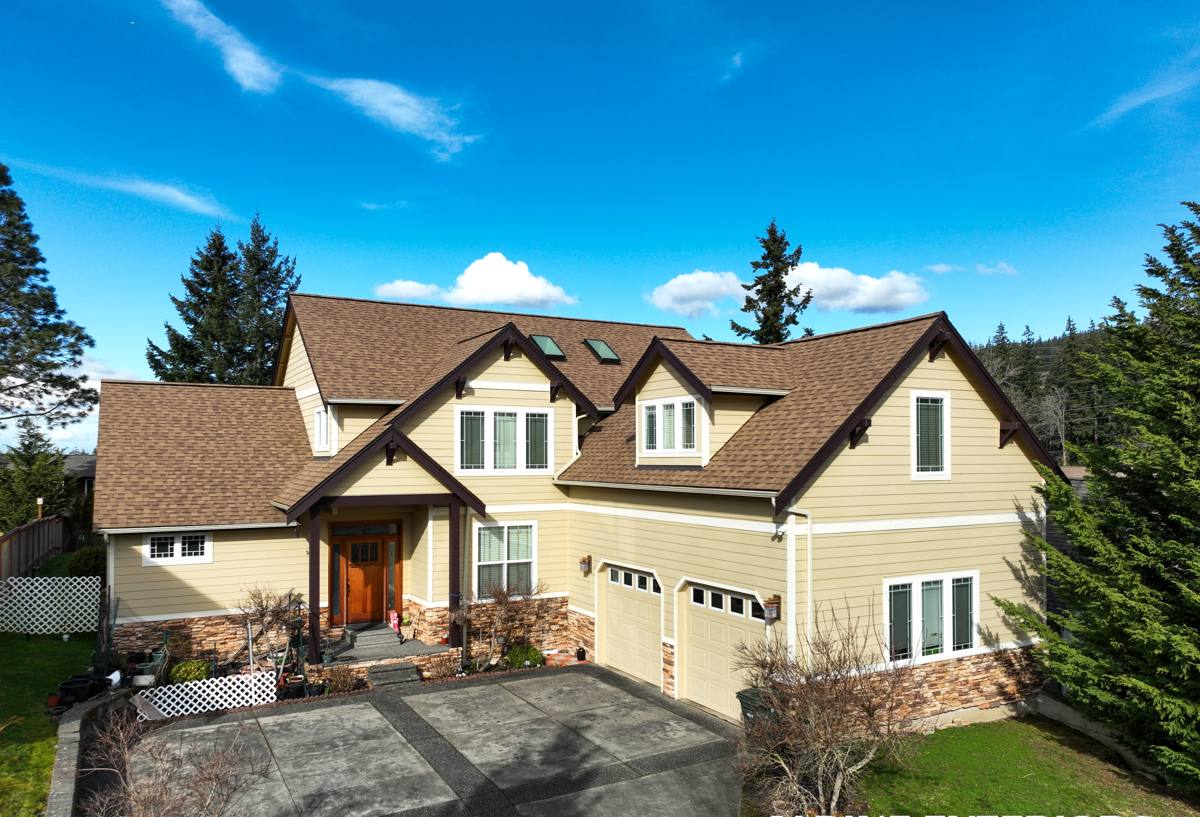
What Salt Air, Rain, and Moss Actually Do to Siding
Three environmental factors show up over and over on Old Town Anacortes homes, and each one attacks siding differently.
Salt air
Airborne salt from the marine environment accelerates corrosion on fasteners, flashing, and any exposed metal trim. It also breaks down paint film and caulk faster than it would inland, which is why so many older homes in this part of Anacortes show chalky, peeling, or faded siding on the water-facing side well before the rest of the house looks worn.
Driving rain
Wind off the water pushes rain sideways into walls instead of letting it run straight down, which puts real pressure on every seam, joint, and penetration in the siding system. A siding job that isn't detailed for wind-driven rain — proper laps, flashing, and a drainage gap behind the cladding — will eventually let water behind the wall, even if the surface looks fine.
Moss season
Shaded, north-facing, and tree-covered walls in Old Town Anacortes can stay damp for months at a stretch. That moisture is what moss needs to take hold, and once it's established on siding it holds even more water against the surface, which is a slow but steady path to rot on wood-based products and premature paint failure on almost anything.
None of this is unique to one street or one block — it's a function of being close to Rosario Strait and the Salish Sea, in a county that sees a long wet season. It's the baseline condition we design every Old Town Anacortes siding job around.
Why We Only Install James Hardie Fiber Cement Here
We standardized on James Hardie fiber cement siding for every home we side in Anacortes, including Old Town, and we don't install vinyl, LP SmartSide, cedar, primed spruce, or other fiber cement brands. That's a deliberate call, not a default.
- Non-combustible core — fiber cement doesn't feed a fire the way wood-based products can, which matters on any home near dry brush or during regional wildfire smoke seasons.
- Moisture-stable — it doesn't swell, rot, or delaminate the way engineered wood siding can when it stays damp under moss or shaded overhangs.
- Salt- and weather-resistant finish — Hardie's ColorPlus factory finish is baked on and warranted against fading and peeling in ways field-applied paint isn't, which matters directly for salt-air exposure.
- Built-in climate engineering — Hardie's HZ5 product line is engineered for the wetter, freeze-thaw Pacific Northwest climate zone, which includes Anacortes and the rest of Skagit County.
- A real warranty — a transferable, manufacturer-backed warranty that stays meaningful if the home changes hands.
We're not going to tell you other siding products are junk — plenty of them have real strengths. But for a marine-exposed neighborhood like Old Town Anacortes, the maintenance burden and moisture risk of the alternatives isn't a trade-off we're willing to put our name behind. Fiber cement, installed correctly, is what we believe holds up.
What a Correct Fiber Cement Installation Involves
Fiber cement siding is only as good as the installation behind it. Most of the failures we get called out to inspect on older Anacortes homes aren't a material problem — they're an installation shortcut that let water get where it shouldn't.
Drainage plane and rainscreen gap
Fiber cement should never sit flush against the weather-resistive barrier. A drainage gap — furring strips or a purpose-built rainscreen product — lets any water that gets past the siding drain and dry out instead of sitting against the sheathing. On a wind-driven-rain site like Old Town Anacortes, this detail matters more than almost anything else in the job.
Flashing and clearances
Every window, door, and penetration needs proper head flashing and kick-out flashing where rooflines meet walls. Siding also needs correct clearance from grade, roofing, and hardscape — running siding too close to the ground or a walkway is one of the most common causes of moisture damage we see on inspection.
Fastening and joint treatment
Fasteners need to be corrosion-resistant and set to Hardie's specification — not overdriven, not underdriven. Butt joints get treated with the correct sealant or H-channel per Hardie's install guide, and caulking is used at transitions, not as a substitute for proper flashing.
Installed to spec, fiber cement siding is built to shed wind-driven rain and resist the moisture cycling that Old Town Anacortes homes deal with most of the year. Installed off-spec, it can trap water just as easily as any other product — the material doesn't fix a bad detail.
Matching Siding to Old Town's Older Homes
A lot of Old Town Anacortes homes have real character — older construction, established trim details, and a mix of vintages on the same block. When we side a home in this neighborhood, we're usually working around existing trim, window casings, and roof details rather than a blank slate, and we match the reveal, profile, and trim lines so the new siding reads as part of the house instead of an obvious retrofit.
Hardie's lineup gives us the range to do that: lap siding in multiple widths and profiles, shingle-style panels for gable accents or full elevations, and trim boards that match traditional dimensions. We also plan color and texture with the salt-air and shade conditions of the specific elevation in mind — a south-facing wall and a shaded, moss-prone north wall don't always call for the same finish.
James Hardie Product Lines for This Climate
| Product Line | Best Use | Why It Fits Old Town Anacortes |
|---|---|---|
| HZ5 Lap Siding | Full elevations, primary cladding | Engineered for Pacific Northwest moisture and freeze-thaw cycling |
| HZ5 Shingle Panels | Gables, accent walls, dormers | Adds texture on older-style homes without the moisture risk of real cedar shingle |
| ColorPlus Trim Boards | Corners, window/door casings, fascia | Factory-finished, matches traditional trim dimensions common in Old Town |
| Board & Batten | Accent sections, additions | Clean vertical lines that pair well with the neighborhood's older architecture |
Our Process, Start to Finish
- On-site assessment — we walk the home, check every elevation for moss, moisture staining, and existing siding condition, and flag any rot or sheathing damage before we quote.
- Detailed proposal — product lines, profiles, colors, and flashing/drainage plan specific to your home, not a generic package.
- Tear-off and prep — removal of old siding, inspection and repair of sheathing and framing, and correction of any past flashing or clearance mistakes we find underneath.
- Drainage plane and flashing install — the weather-resistive barrier, rainscreen gap, and flashing details go in before a single piece of siding is hung.
- Siding and trim installation — installed to Hardie's fastening and clearance specs, elevation by elevation.
- Final walkthrough — we inspect joints, caulking, and clearances with you before calling the job done, and clean up the site fully.
What Affects the Cost of the Job
| Factor | Why It Matters |
|---|---|
| Home size and elevation count | More wall area and more corners/transitions mean more material and labor |
| Existing siding removal | Tear-off, disposal, and any sheathing repair found underneath add time |
| Product line and profile | Shingle-style and board-and-batten accents cost more per square foot than standard lap |
| Trim and detail work | Older homes with more window casing and architectural trim take more labor to match |
| Access and site conditions | Slope, tight lot lines, and proximity to neighboring structures affect setup and staging |
We give a firm, itemized number after the on-site assessment — we don't quote blind off a photo or a phone call, especially on a home where hidden moisture damage is a real possibility.
Signs an Old Town Anacortes Home May Need New Siding
- Moss or persistent green staining that keeps coming back after cleaning, especially on shaded or north-facing walls
- Paint that's chalking, peeling, or fading noticeably faster on the water-facing side of the house
- Soft or spongy spots when you press on the siding, particularly near the bottom courses or window sills
- Visible gaps, warping, or separated joints between siding boards
- Rust streaking from fasteners or trim, a common salt-air symptom
- Musty smell or interior staining on walls that back up to exterior siding
Why a Local Crew That Already Works Old Town Anacortes Matters
A crew that regularly works this neighborhood already knows what a marine-exposed, older-home job here requires — how much drainage detail to build in, how the moss pattern usually runs on a given lot orientation, and how to match trim on a house that's been added onto over the years. That's different knowledge than a crew that mostly works new-construction subdivisions inland, and it shows up in how the job holds up five and ten years out, not just on install day.
It also means a shorter response time if something needs a look after the fact, and a crew that isn't guessing at how Anacortes' weather patterns behave over a full year.
If you're weighing a siding project on an Old Town Anacortes home, we're happy to come take a look and give you a straight, no-pressure estimate — fill out the form below to get started.