 Anacortes
 Why Window Replacement Works Differently in Old Town Anacortes
Old Town Anacortes sits close to the water, and that proximity shapes everything about how windows age here. Salt-laden air corrodes hardware and finishes faster than it does even a few miles inland. Driving rain off the water finds every gap in flashing and trim that a builder-grade install left loose. And the long, wet moss season common to Skagit County keeps wood trim and sills damp for weeks at a stretch, which is exactly the condition rot and mildew need to take hold.
Add in that a lot of the housing stock in this part of Anacortes is older, and you get a specific set of problems: original wood-frame windows that have been painted over a dozen times, single-pane glass with storm windows bolted on as an afterthought, and openings that were never flashed correctly because building science on that point simply wasn't standard practice when the homes went up. Replacing windows here isn't just a swap — it's a chance to correct decades of moisture exposure that a generic install elsewhere in the county wouldn't have to deal with.
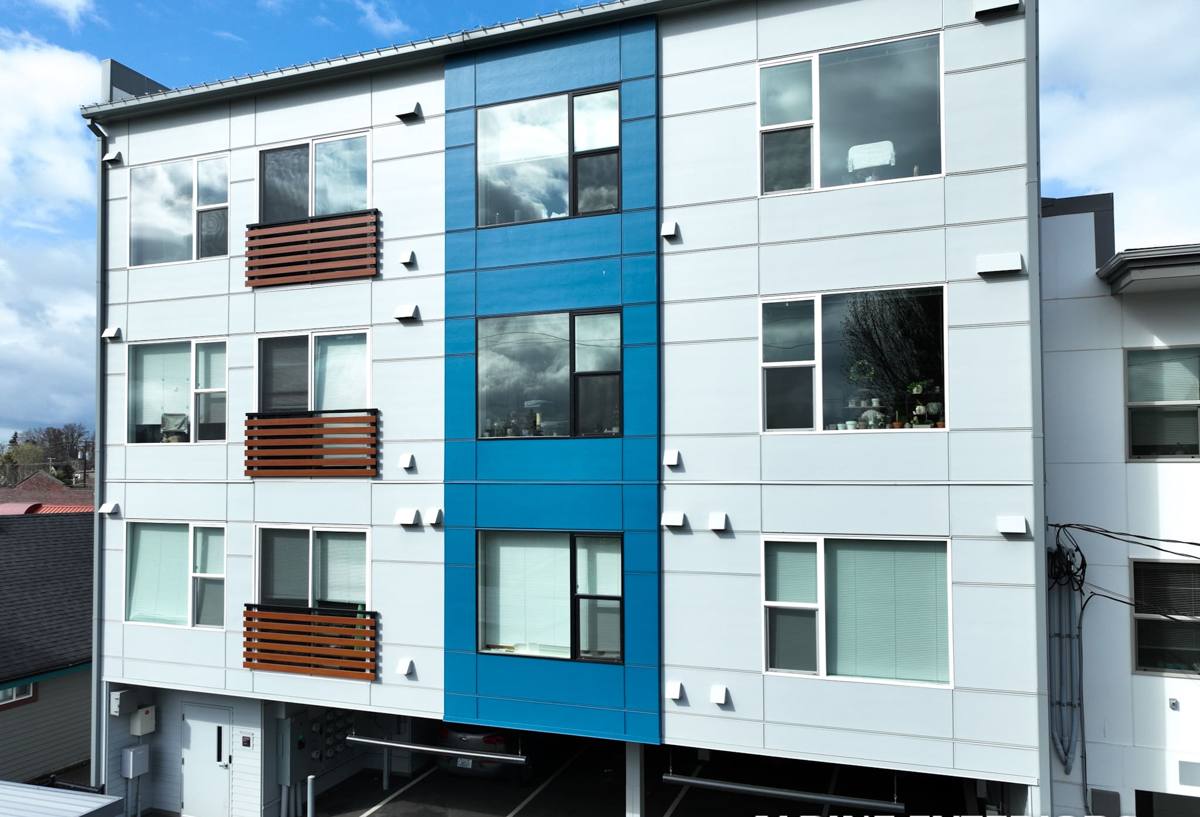
Signs Your Windows Are Due for Replacement
Homeowners often wait longer than they should because the symptoms show up gradually. Watch for these:
- Condensation forming between panes on double-glazed units — this means the seal has failed and the insulating gas is gone
- Wood sills that feel soft, spongy, or show dark staining, especially on the sides of the house that face prevailing wind and rain
- Windows that are hard to open, close, or lock — frames can swell and warp from repeated wetting and drying
- Visible daylight or a noticeable draft around the frame when it's windy
- Chalky, pitted, or corroded aluminum or steel hardware — a common tell in homes exposed to salt air
- Green or black growth on exterior trim that keeps coming back no matter how often it's cleaned
Any one of these on its own might just need a repair. Several at once, especially on an older window, usually means the frame and seal system have reached the end of their useful life.
What a Correct Window Replacement Job Involves
The window itself is only part of the job. Most premature failures we see in this area trace back to the installation, not the product. A correct replacement includes:
Removing the Old Unit Without Guessing at What's Behind It
Once the old window is out, the rough opening gets inspected for hidden rot or water damage — common in older Old Town homes where the original flashing was minimal or missing entirely. Any damaged framing gets addressed before a new window goes in, not covered over.
Flashing and Water Management
This is the step that matters most in a climate with this much driving rain. Proper flashing directs water down and out and away from the wall assembly, using a shingle-style layering so each piece overlaps the one below it. Skipping or shortcutting this step is the single biggest cause of hidden rot behind a "new" window a few years down the road.
Sealing and Insulating the Gap
The gap between the new window frame and the rough opening gets insulated and air-sealed, then the exterior gets sealed with a quality sealant rated for the substrate. Left un-insulated, that gap becomes a channel for both drafts and moisture.
Exterior Trim and Finish Work
Trim gets reinstalled or replaced so the finished look matches the house, and any exposed wood gets primed and painted (or capped) on all sides — including the back, which is the side that actually takes on water first.
Choosing the Right Window Materials for Salt Air and Moss Season
Material choice matters more here than in a drier, inland climate. We steer homeowners away from certain products not because they're bad everywhere, but because they carry trade-offs that get worse in a marine environment.
| Frame Material | How It Handles Salt Air & Moisture | Maintenance |
|---|---|---|
| Vinyl | Doesn't corrode or rot; performs consistently near the water | Low — occasional cleaning |
| Fiberglass | Very stable, resists warping and doesn't corrode; strong option for this climate | Low |
| Wood (unclad) | Handsome, but bare wood is the most vulnerable to the region's rain and moss exposure | High — regular painting/sealing |
| Wood-clad (vinyl or aluminum exterior) | Wood interior with a protective exterior shell; good if the look of wood is important | Moderate — cladding still needs care at seams |
| Aluminum | Prone to corrosion and pitting in salt air unless properly finished; thermally less efficient | Moderate to high |
For most Old Town Anacortes homes, we recommend vinyl or fiberglass frames with a good low-E, double- or triple-pane glass package. If the home's character calls for a wood look, wood-clad units give you that appearance without leaving raw wood exposed to the weather.
Glass and Hardware Details Worth Asking About
Low-E coatings help with both summer heat gain and winter heat loss, which matters given how much grey, overcast weather this part of Washington gets. Ask about corrosion-resistant hardware (stainless or coated) rather than standard finishes — in a salt-air environment, hardware is often the first thing to fail, well before the glass or frame does.
Full-Frame Replacement vs. Insert Replacement
Not every window needs to come out down to the studs. The right approach depends on the condition of the existing frame.
| Factor | Insert (Pocket) Replacement | Full-Frame Replacement |
|---|---|---|
| Existing frame condition | Must be sound, square, and rot-free | Required when frame is damaged, rotted, or out of square |
| Access to flashing/wall cavity | None — relies on the existing flashing | Full access to re-flash and correct water management |
| Typical cost | Lower | Higher, due to added labor and trim work |
| Best fit for older Old Town homes | Only where a prior inspection confirms the frame is in good shape | Common recommendation, since many original frames here have moisture history |
Because so many homes in this neighborhood have older, unflashed or under-flashed openings, we don't default to insert replacements just because they're cheaper. If we find the existing frame has taken on water over the years, we'll tell you honestly and recommend full-frame instead — it costs more, but it's the only way to actually fix the moisture problem instead of sealing it back up behind a new window.
Our Process, Start to Finish
- Free on-site estimate — we look at each window individually, not just the house as a whole, since exposure varies by side of the house
- Honest assessment of whether insert or full-frame replacement is the right call, with reasons explained
- Material and glass package recommendations based on which side of the house the window is on and how exposed it is to wind-driven rain
- Written quote with a clear scope, so you know exactly what's included before work starts
- Installation, including flashing, insulation, and exterior sealing done to a standard that accounts for this area's weather, not a generic spec
- Final walkthrough and cleanup — every window is operated, checked, and cleaned before we consider the job done
Why It Matters to Hire a Crew That Already Works This Neighborhood
A crew that's worked in Old Town Anacortes before already knows what to expect when the old window comes off: the likely age of the framing, the kind of flashing (or lack of it) common to the era, and how badly salt air and prolonged moss-season moisture tend to have affected the sill and jambs. That's not something you can fully judge from a photo or a quick walk-around — it comes from having opened up enough of these walls to know what's usually hiding behind the trim.
It also means fewer surprises mid-job. When a crew has already dealt with the typical rot patterns and framing quirks in this part of Anacortes, they can price the job more accurately up front and are less likely to hit something unexpected that stalls the work or blows the budget.
Homeowner Checklist: Keeping New Windows Performing Long-Term
- Rinse salt residue off frames and glass a few times a year, especially after storms
- Check exterior caulk and sealant lines annually for cracking or separation
- Keep gutters and downspouts clear so water isn't sheeting down past window heads
- Clean weep holes on the exterior sill track so water can drain instead of pooling
- Trim back vegetation that holds moisture against the wall near window openings
- Address any new condensation between panes right away — it won't resolve on its own
- Repaint or re-seal any exposed wood trim before, not after, it starts to look weathered
If your windows are showing their age — or you just want a straight answer on whether insert or full-frame replacement makes sense for your house — we're happy to take a look. The estimate is free, there's no pressure, and you'll get an honest read on what your windows actually need, not just a sales pitch. Use the form below to get started.