 Anacortes
 Roof Repair Built for March Point's Coastal Exposure
March Point sits out on the water, and that location cuts both ways. The views are part of why people live there, but the same open exposure that gives you those views also means your roof takes a harder hit from wind-driven rain, salt-laden air, and the damp, shaded stretches that never quite dry out between storms. A roof that would last two decades in a sheltered inland neighborhood can start showing real wear in half that time out here if it wasn't built or maintained with that exposure in mind.
We work on roofs throughout Anacortes and the rest of Skagit County, and March Point comes with its own set of patterns we watch for: salt air working on metal fasteners and flashing, wind pushing rain sideways under shingle edges instead of straight down, and moss taking hold in the shaded, slow-drying sections of the roof plane. None of that is exotic or mysterious — it's just what happens to roofing materials in this specific climate, and a repair that doesn't account for it tends to fail again within a season or two.
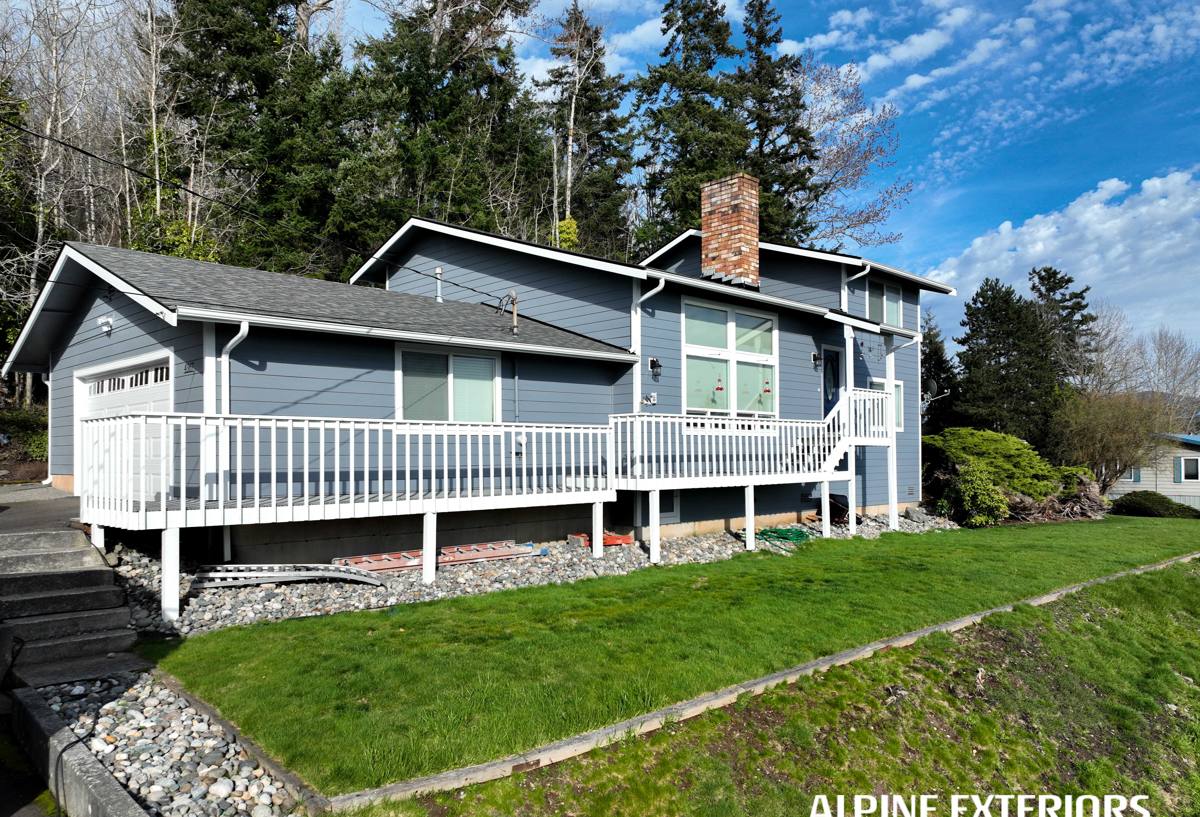
What Salt Air, Driving Rain, and Moss Actually Do to a Roof
Salt Air
Being close to the water means airborne salt settles on every exterior surface, including your roof. Over time it accelerates corrosion on exposed metal — nail heads, flashing, vent boots, gutter hardware — especially on anything not rated for coastal use. Corroded fasteners lose their grip, flashing seams open up, and small gaps that started as cosmetic become entry points for water.
Driving Rain
Storms coming off the water don't just fall — they push. Wind-driven rain gets forced sideways and upward under shingle tabs, around vent penetrations, and along valley lines in a way that vertical rain never would. A roof that's watertight in a straight-down downpour can still leak in a wind-driven one if the flashing details and shingle seal strips aren't in good shape.
Moss and Algae
Skagit County's mild, wet winters and shaded roof sections give moss a long growing season — often close to year-round on north-facing slopes and areas under tree cover. Moss doesn't just look bad. It holds moisture against the roofing material, lifts shingle edges as it grows, and works its root structure into seams and granule surfaces, opening pathways for water that weren't there when the roof was installed.
Common Roof Repair Issues We See Around March Point
- Lifted or curled shingle edges from repeated wind-driven rain and freeze-thaw cycling
- Corroded or loosened flashing around chimneys, skylights, and roof-to-wall transitions
- Moss colonies on shaded or north-facing slopes, sometimes visible, sometimes hidden under a layer of algae staining
- Clogged or sagging gutters that back water up under the roof edge during heavy storms
- Failed pipe boots and vent seals where rubber gaskets have hardened and cracked from UV and salt exposure
- Granule loss on older asphalt shingles, leaving the underlying mat exposed to weather
- Soft spots or staining on interior ceilings that trace back to a slow leak rather than an obvious hole
What a Correct Repair Actually Involves
A lot of roof "repairs" amount to caulking over a symptom without addressing what let water in to begin with. That approach might buy a season, but on a March Point roof — with the wind and moisture load this location sees — it usually doesn't hold. A repair worth doing includes a few consistent steps regardless of what triggered the call.
Diagnosis Before Anything Gets Touched
We start by tracing the actual water path, not just patching where a stain shows up inside. Interior leaks often travel along rafters or sheathing before they show up on a ceiling, so the visible damage and the actual entry point can be several feet apart. Getting this wrong means fixing the wrong spot and having the same leak reappear.
Addressing the Root Cause, Not Just the Symptom
If the underlying issue is failed flashing, we replace the flashing — not just seal over it. If it's a cracked pipe boot, we replace the boot. If moss has lifted shingles and trapped moisture underneath, we remove the moss, treat the affected area, and assess whether the shingles underneath are still sound or need replacing. Sealant has a place in roofing, but it's a finishing step, not a substitute for correct flashing and material work.
Matching Materials Correctly
Repairs on an existing roof need materials that are compatible with what's already up there — matching shingle type, weight, and where possible, color, along with corrosion-resistant fasteners and flashing suited to coastal air. Mismatched materials can create new points of stress or accelerate wear in the surrounding original roofing.
Repair or Replace? Honest Cost Factors
Not every roof problem calls for a full replacement, and not every leak can be permanently solved with a patch. The right call depends on the roof's age, how widespread the damage is, and what's actually happening underneath the surface layer.
| Factor | Favors Repair | Favors Replacement |
|---|---|---|
| Roof age | Under 10-15 years, still within expected lifespan | Approaching or past the material's rated life |
| Extent of damage | Localized — one flashing detail, one section of shingles | Widespread granule loss, multiple leak points, moss across large areas |
| Decking condition | Solid, dry sheathing under the affected area | Soft, rotted, or repeatedly wet sheathing |
| Moss/algae history | First occurrence, caught early | Recurring, deeply established colonies |
| Underlying cause | Isolated failure (one boot, one flashing seam) | Systemic issue — original installation or ventilation problem |
We'll tell you honestly which category your roof falls into. If a repair will genuinely hold, we're not going to push a replacement — and if a repair would just be a temporary patch on a roof that's structurally near the end of its life, we'll say that too, along with why.
How Our Repair Process Works
1. Inspection and Written Assessment
We get on the roof, document what we find, and walk you through it in plain terms — what's causing the problem, what it will take to fix, and what happens if it's left alone.
2. Clear Scope and Pricing
You get a scope of work before anything starts, so there's no ambiguity about what's included.
3. The Repair Itself
This includes moss and debris removal where relevant, replacement of failed flashing or boots, shingle repair or replacement in the affected section, and a check of surrounding areas that took the same weather exposure.
4. Post-Repair Check
Before we consider the job done, we confirm the repair is sealed and functioning correctly, and flag anything nearby that's worth keeping an eye on going forward — even if it doesn't need work today.
Preventing the Next Repair Call
A repair fixes the immediate problem. A little routine attention afterward is what keeps you from making the same call again in a year or two, especially in a location as exposed as March Point.
- Keep gutters clear so water isn't backing up under roof edges during storms
- Trim back tree limbs that shade roof sections and slow drying, since shade is what lets moss establish in the first place
- Have moss and algae growth addressed while it's still light, before it lifts shingles or holds moisture against the roof deck
- Check attic ventilation — poor airflow traps moisture from the inside, which compounds what's happening from weather on the outside
- Schedule a roof check after major windstorms, since driving rain can find new entry points without leaving obvious exterior signs
Why Local Experience on March Point Roofs Matters
A roofing crew that mostly works drier, more sheltered inland areas isn't automatically prepared for what a waterfront property in Skagit County throws at a roof. Flashing that's adequate elsewhere can be undersized for the wind loads out here. Fasteners rated for general use can corrode faster in salt air than a crew unfamiliar with the area might expect. And moss treatment that works on a roof with a few hours of afternoon sun does less on a shaded slope that stays damp most of the week.
Working in this area regularly means we've already seen how March Point's particular mix of wind, salt, and moisture plays out on different roof types and orientations — and we bring that into every repair, not just the big jobs. It's the difference between a fix that's sized for the conditions and one that's sized for a more generic climate.
Signs It's Time to Call for a Roof Repair
- Visible moss or heavy algae staining on any part of the roof
- Missing, curled, or cracked shingles, especially after a windstorm
- Water stains or discoloration on interior ceilings or walls
- Granules collecting in gutters or at downspout outlets
- Daylight visible through the roof deck from inside the attic
- Flashing that looks rusted, lifted, or separated from the surface it's sealing
- A roof that's within a few years of its expected lifespan and hasn't been inspected recently
If your March Point home is showing any of these signs, it's worth getting a straight answer on what's going on before a small issue turns into interior damage. We're happy to come take a look, walk the roof, and give you a clear, no-pressure estimate — just fill out the form below to get started.