 Anacortes
 Similk Beach sits along Similk Bay on the south end of Fidalgo Island, a part of Skagit County where the weather that shapes every roof in this region shows up in full force. Salt-laden air off the water, wind-driven rain during winter storms, and a moss season that can stretch across most of the year under heavy tree cover all take a toll on roofing here faster than they do twenty miles inland. Replacing a roof correctly in Similk Beach isn't just a matter of pulling off old shingles and nailing down new ones — it's about building the whole system to handle exposure and moisture that a lot of general roofing advice doesn't account for. We work on roofs throughout Anacortes and greater Skagit County, and Similk Beach is one of the areas where the details make a bigger difference than average.
What Makes a Similk Beach Roof Age Faster
A handful of factors stack up on top of each other here. Salt air off the bay accelerates corrosion on exposed metal — fasteners, flashing, roof vents, and gutter hardware all wear faster than they would in a drier, inland climate. Wind-driven rain tests every seam, valley, and penetration on a roof, and on lots with more open exposure toward the water, that rain doesn't just fall straight down — it drives sideways under shingle edges and flashing that isn't detailed tightly enough.
Then there's tree cover. Many Similk Beach properties sit under mature evergreens, which is part of the area's appeal but also means shaded roof sections that stay damp long after a storm passes. That combination of shade and moisture is exactly what moss and algae need to establish, and once it takes hold, it holds water against the shingle mat and shortens the roof's usable life well before it would otherwise be due for replacement. A roof on a wide-open, sun-exposed lot and a roof on a densely shaded lot a quarter mile away can age at noticeably different rates, even though they're both in Similk Beach.
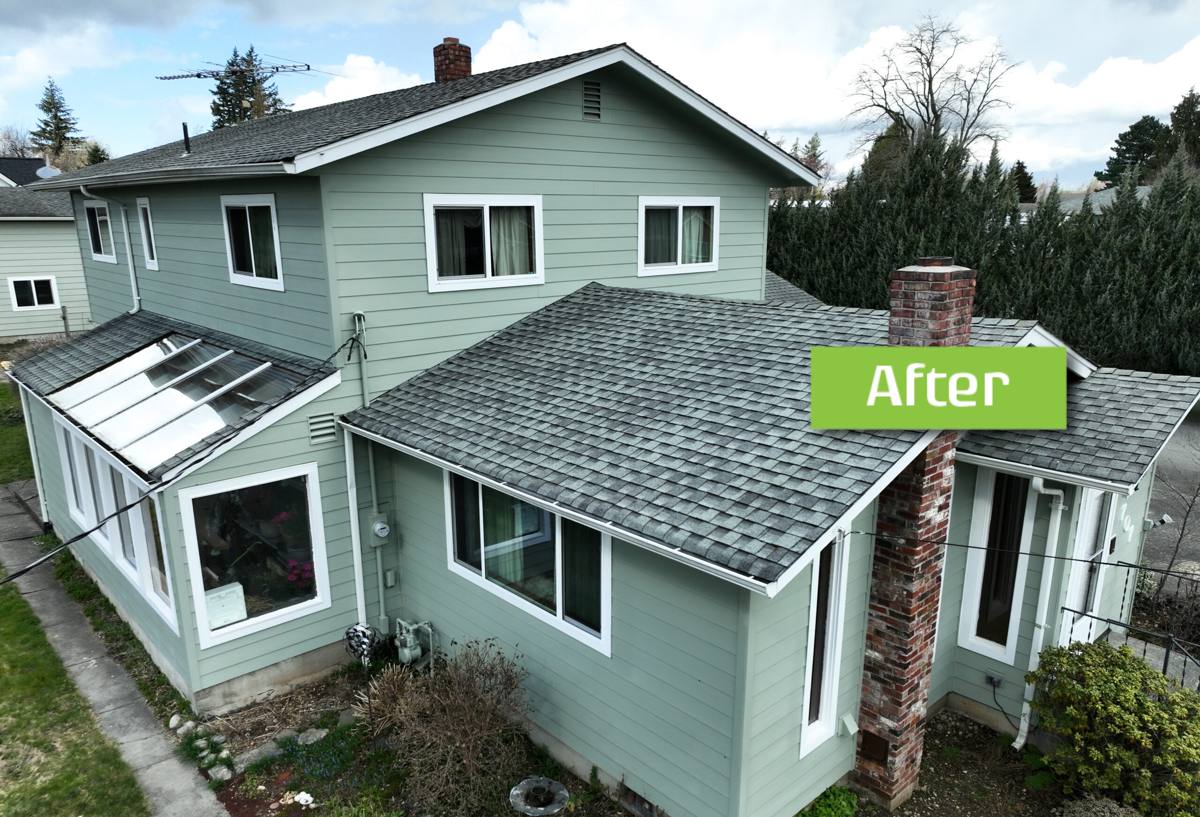
Signs Your Roof Needs Replacing, Not Just Repair
Not every roofing problem means the whole roof needs to come off. A localized leak after a windstorm, a handful of blown-off shingles, or a small area of moss buildup can often be repaired. The signs below point toward something more systemic — the roof's ability to shed water is failing across the board, not just in one spot.
- Shingles curling, cupping, or losing granules across large sections rather than one isolated area
- Moss or algae covering full slopes, not just shaded edges, especially if it's thick enough to lift shingle tabs
- Soft or spongy decking underfoot, or visible sagging between rafters
- Daylight visible through the roof deck from inside the attic
- Interior ceiling stains that reappear after cleaning, especially near valleys or wall intersections
- Multiple repair calls to the same areas over the past couple of years
- A roof approaching or past the expected service life of its material, especially if it's the original roof on an older home
If you're only seeing one of these, a repair is often the right call. If you're seeing several at once, that's usually a sign the roofing system as a whole is nearing the end of its service life rather than dealing with an isolated problem.
Choosing the Right Roofing Material for This Location
There isn't one single "best" roofing material for Similk Beach — the right choice depends on how exposed or shaded a given roof is, the home's style, and the homeowner's budget and maintenance appetite. What matters is picking a material rated for sustained moisture and, where tree cover is heavy, one with built-in resistance to moss and algae growth.
| Material | How It Performs in This Climate | Maintenance Considerations |
|---|---|---|
| Architectural asphalt shingles (algae-resistant) | Good balance of cost and durability; algae-resistant granules matter under tree cover | Periodic moss removal on shaded slopes; typical 25-30 year rated lifespan here |
| Standing seam metal roofing | Sheds wind-driven rain well, resists moss better than shingles, holds up to salt air when properly finished | Higher upfront cost; occasional fastener and seam checks |
| Standard 3-tab asphalt shingles | Lower cost but less resistant to wind lift and granule loss in driving rain | Shorter service life in this climate; more frequent inspection needed |
| Cedar shake | Traditional look but demands the most upkeep in a wet, moss-prone environment | Regular treatment and cleaning required to prevent rot and moss colonization |
When we walk a Similk Beach roof, we're looking at which slopes get direct sun, which stay shaded most of the day, and whether the lot has open water exposure or more shelter from trees and terrain. That informs both the material recommendation and, in some cases, using a different shingle grade or additional treatment on the sections that take the worst of it.
Algae-Resistant Shingle Lines
Most major shingle manufacturers now offer algae-resistant (AR) product lines, which blend copper or zinc granules into the shingle surface to slow moss and algae regrowth. Given how much tree cover exists across Similk Beach, we specify AR shingles as a standard, not an upgrade, on roofs where shading is a factor. It won't stop moss from ever appearing, but it meaningfully slows regrowth compared to standard granules, which means fewer cleanings and a roof that holds its appearance longer.
What's Underneath Matters: Decking, Underlayment, and Flashing
The shingles or metal panels are the part everyone sees, but a roof's actual performance comes down to what's underneath. Tear-off is when we find out what's really going on with the decking — soft or delaminated sheathing from long-term moisture intrusion needs to be replaced before anything new goes down, because installing a new roof over compromised decking just guarantees a shorter lifespan for the new material too.
A quality synthetic underlayment goes down next, providing a secondary water barrier if wind-driven rain ever gets past the roofing material itself. Flashing at chimneys, skylights, sidewalls, and roof-to-wall transitions gets special attention, since these are the highest-risk points for leaks on any roof, and doubly so on a property that takes direct wind off the bay.
Ice-and-Water Shield at Eaves and Valleys
In valleys and along eaves — the two spots where water concentrates and moves fastest during a storm — we install a self-adhering waterproof membrane underneath the primary roofing material. This is the kind of detail that doesn't show once the job is finished, but it's the difference between a roof that sheds a heavy, wind-driven rain event cleanly and one that lets water back up under the shingles at exactly the spots where it's hardest to notice until there's damage inside.
Ventilation: The Overlooked Factor in Moss and Shingle Life
Ventilation gets less attention than material choice, but it has a direct effect on how long a roof lasts in a climate like this. Balanced intake and exhaust venting keeps the attic and roof deck closer to outside temperature and humidity, which reduces the moisture cycling that shortens shingle life and slows how quickly a shaded roof deck dries out after rain — a real factor on the tree-covered lots common around Similk Beach. A roof deck that stays damp longer gives moss more time to establish, even with algae-resistant shingles installed.
When we replace a roof here, checking and, where needed, upgrading intake and exhaust ventilation is part of the scope, not an afterthought tacked on separately.
Our Roof Replacement Process
- On-site inspection that looks at your specific roof's exposure, shading, decking condition, and existing ventilation, not just its age
- Written estimate laying out material options, scope of work, and what's included — tear-off, disposal, and any decking repair
- Permitting handled before work begins, since requirements can run through either Skagit County or the City of Anacortes depending on the parcel
- Tear-off and a full decking inspection, with any compromised sheathing replaced before underlayment goes down
- Underlayment, ice-and-water shield at eaves and valleys, and flashing installed at every penetration and transition
- Roofing material installed to manufacturer specification, including proper fastening patterns for wind exposure
- Ventilation checked and adjusted as needed to balance intake and exhaust
- Full site cleanup, including a magnetic sweep for stray nails and complete debris haul-off
- Final walkthrough so you know exactly what was done and what to expect going forward
Permits and Weather Windows
We schedule Similk Beach roof replacements with the region's wet season in mind. On multi-day jobs, that means planning tear-off sections so the roof is never left exposed overnight without a dried-in surface, and building in flexibility around forecasted rain rather than racing a storm. It takes longer to plan around, but it's the difference between a clean job and water damage nobody wanted.
Why Hiring a Crew That Already Works Similk Beach Matters
A crew that's worked this area before knows what to expect before the ladder goes up. That includes reading which slopes on a shaded, tree-covered lot need extra moss treatment versus which ones get enough sun and airflow to stay cleaner longer, working around tight or wooded driveway access common on smaller Similk Beach parcels, and understanding which permitting path applies depending on whether a given property falls under county or city jurisdiction. It also means having a realistic sense of how local weather patterns affect scheduling, so a job doesn't get started only to stall out waiting on a dry window.
None of that shows up on an invoice, but it shows up in how smoothly the project goes and how the finished roof performs once the next wet season hits.
If your roof in Similk Beach is showing its age, or you just want an honest read on whether repair or replacement makes more sense for your specific home, we're glad to take a look. Reach out for a free, no-pressure estimate.