 Anacortes
 Composite Decking Built for Sedro-Woolley's Climate
Sedro-Woolley sits in the Skagit River valley, close enough to the coast to catch driving rain off the water and humid enough, most of the year, to keep moss and algae in business on anything that stays damp. A deck here isn't just outdoor furniture — it's a structure that spends eight or nine months a year wet, shaded, or both. Composite decking has become the default choice for homeowners in this part of Skagit County precisely because it doesn't rely on paint or stain to keep water out. The material itself resists rot, and that matters when your deck sees more grey days than sunny ones.
That doesn't mean every composite board or every installation performs the same way in this climate. How the deck is framed, flashed, and ventilated underneath matters just as much as the decking brand you choose. We've installed and repaired decks throughout Sedro-Woolley and the surrounding Anacortes area long enough to know which details actually matter here and which are just marketing.
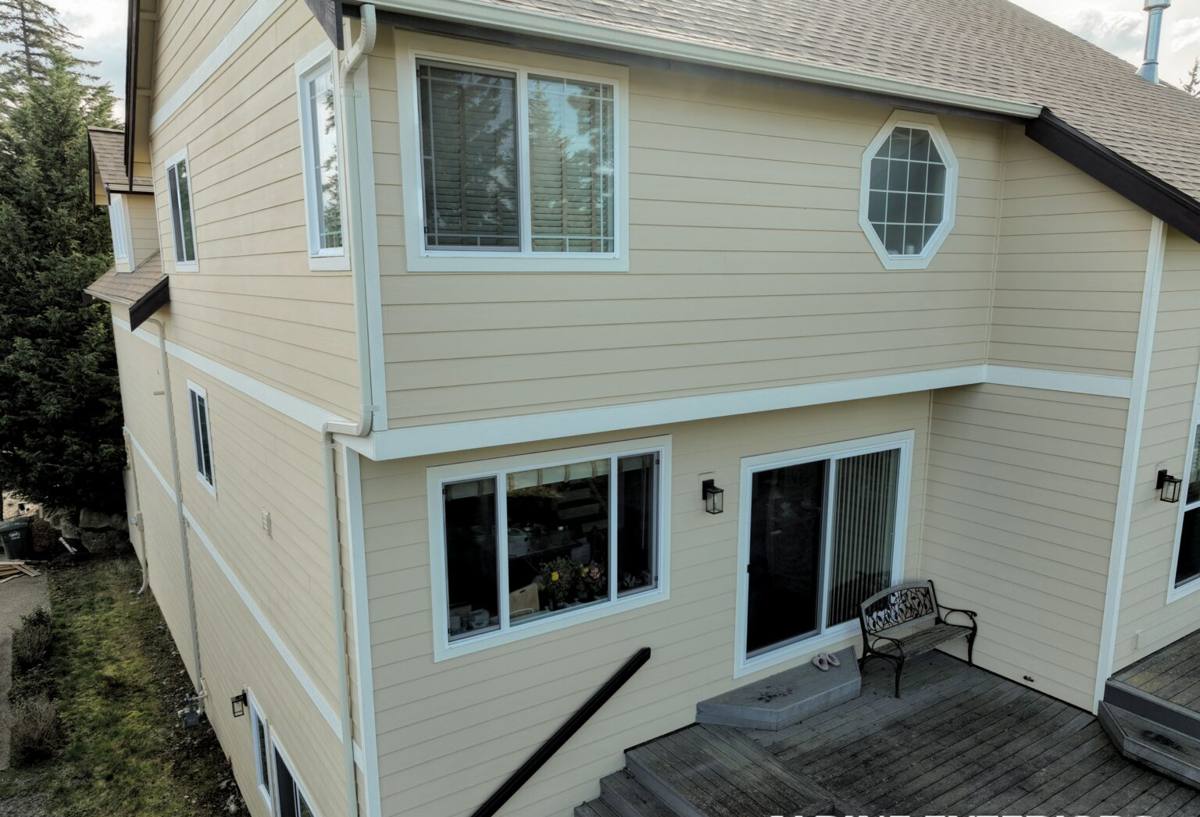
What Sedro-Woolley Homes Need From a Deck
A handful of local conditions shape how we approach every composite decking job in this area:
- Persistent moisture: Rain, river-valley fog, and morning dew keep deck surfaces wet longer than they would in a drier climate, which is exactly the environment moss and mildew need to take hold.
- Heavy tree cover: Many Sedro-Woolley lots back up to trees or sit under mature canopy, which means shade, falling debris, and slower drying — all of which accelerate moss growth on any surface that isn't sloped or ventilated properly.
- Older homes, older framing: Sedro-Woolley has a lot of established neighborhoods with homes built decades ago. Ledger boards, rim joists, and existing framing on these houses often need extra attention — sistering, flashing, or reinforcement — before new decking goes down.
- Freeze-thaw swings: Being inland from the water, Sedro-Woolley can see colder overnight temperatures and more frost than immediate coastal Anacortes. Fasteners, footings, and board spacing all need to account for expansion and contraction through the year.
None of this makes composite decking a bad fit here — it's actually one of the better-suited materials for this exact combination of moisture and temperature swing. But it does mean the installation has to be done with those conditions in mind, not just installed the same way it would be in a dry climate.
Composite Decking Options
Capped vs. Uncapped Composite
Most composite decking sold today is "capped" — a wood-plastic composite core wrapped in a protective polymer shell on all sides. That cap is what keeps moisture, mold, and staining from working into the board itself. Older or budget uncapped composite (or capped-on-top-only boards) is more vulnerable to moisture absorption at the edges and cut ends, which is a real liability in a climate that stays damp as long as ours does. We install capped composite as our standard for that reason — it's the product that actually holds up to sustained Skagit County moisture rather than just shrugging off the occasional sunny afternoon.
Board Profiles and Finishes
Composite boards come in grooved-edge (for hidden fastener systems) and square-edge (for visible face-screwed fastening) profiles, in a range of wood-grain and solid-color finishes. Grooved boards with hidden fasteners give a cleaner look and eliminate screw heads where water and grime like to collect — a small detail that matters more in a wet climate than a dry one. Darker colors show less staining from tannins and leaf debris but run warmer underfoot in summer; lighter colors hide dust and pollen better but can show mildew staining sooner if the deck doesn't get airflow. We'll talk through which trade-off fits your yard and sun exposure during the estimate.
What a Correct Composite Deck Installation Involves
Ledger Attachment and Flashing
Where the deck meets the house is the single most common failure point we see on older decks in this area, composite or wood. Proper flashing — installed correctly behind siding and above the ledger board — keeps water from tracking into the house framing. This is not optional in a climate that sees as much driving rain as ours does, and it's the step that gets skipped most often on cheap installs.
Joist Spacing and Framing
Composite decking generally requires tighter joist spacing than solid wood decking — usually 16 inches on center, sometimes closer for diagonal or picture-frame layouts. Framing needs to be built to the decking manufacturer's spec, not just "close enough," or you risk bounce, sagging, or voided warranties.
Fasteners and Hidden Clip Systems
Stainless or coated composite-rated fasteners are worth the extra cost. Standard deck screws can react with the moisture that gets trapped against composite boards over time and cause staining or corrosion streaks. Hidden fastener clip systems, when compatible with the board profile, also reduce the number of penetration points where water can sit.
Ventilation and Drainage Underneath
A composite deck built low to the ground, over a patio, or without gaps for airflow underneath will trap moisture below the boards — which is exactly the environment moss and mildew need, even if the composite surface itself resists rot. Proper clearance, sloped grading beneath the deck, and (where needed) an under-deck drainage system all matter more here than they would in a drier region.
Composite vs. Wood vs. PVC Decking
Homeowners in Sedro-Woolley usually narrow their decision down to these three options. Here's how they generally compare for our climate specifically:
| Material | Moisture Resistance Here | Maintenance | Typical Lifespan |
|---|---|---|---|
| Pressure-treated wood | Moderate — needs sealing/staining regularly to resist Skagit rain and moss | High: annual cleaning, periodic re-staining | 10–15 years before major repair or replacement |
| Capped composite | Strong — polymer shell resists moisture absorption and staining | Low: periodic washing to keep moss/mildew from gaining a foothold | 25–30+ years, backed by manufacturer warranty |
| PVC decking | Very strong — fully synthetic, no wood content to absorb moisture | Low, similar to composite | 25–30+ years, typically higher upfront cost |
We install both composite and PVC decking. Composite tends to be the better value for most Sedro-Woolley homeowners — it delivers most of PVC's moisture performance at a lower cost, with a more natural wood-look finish. We don't install low-grade uncapped composite or unsealed wood as a "budget" option for this climate, because the maintenance burden and shortened lifespan end up costing more over time than the upfront savings are worth.
Our Process
1. On-Site Assessment
We look at your existing structure (if replacing an old deck), the framing condition, drainage, tree cover, and sun exposure before recommending a product or layout. This is also when we flag any ledger, footing, or framing issues that need addressing before new decking goes down.
2. Design and Material Selection
We walk through board colors, profiles, railing options, and layout with you, factoring in how each choice performs under Skagit County conditions — not just how it looks in a sample chip.
3. Permitting
Deck projects in Sedro-Woolley may fall under City of Sedro-Woolley permitting or unincorporated Skagit County permitting, depending on your property's exact location, and the requirements can differ based on deck height, size, and attachment to the house. We handle the permit process as part of the job so you're not tracking down requirements yourself.
4. Installation
Proper flashing, framing to spec, correct fastener selection, and attention to drainage and ventilation underneath — the details covered above aren't upsells, they're the baseline for a deck that holds up here.
5. Final Walkthrough
Before we consider the job done, we walk the finished deck with you, confirm everything meets spec, and go over basic care so you know what to expect in year one and beyond.
What Affects the Cost
| Factor | Why It Matters |
|---|---|
| Deck size and layout | Square footage, multiple levels, and diagonal or picture-frame board patterns all add material and labor |
| Framing condition | Older Sedro-Woolley homes may need ledger repair, sistered joists, or footing work before decking goes on |
| Board tier and brand | Composite pricing varies by manufacturer and product line — entry-level capped boards cost less than premium or PVC lines |
| Railing and fascia | Composite or metal railing systems, plus fascia board wrapping, add to the total beyond the decking surface itself |
| Site access | Sloped lots, limited equipment access, or tree-heavy yards common in Sedro-Woolley can affect labor time |
Composite decking projects in this area typically run from the mid-single-digit thousands for a modest, straightforward deck up into the higher five figures for large, multi-level decks with premium materials and custom railing. We'll give you a firm number after the on-site assessment — we don't quote off a phone call for a structural project like this.
Keeping a Composite Deck Ahead of the Moss
Composite decking doesn't need staining or sealing, but it isn't zero-maintenance in a climate like ours. A little seasonal attention keeps moss and mildew from getting a foothold:
- Sweep off leaves, needles, and debris regularly, especially in fall and under tree cover
- Wash the deck surface a couple of times a year with a mild soap and water or a composite-safe cleaner — avoid pressure washing at close range, which can damage the cap
- Keep gutters and downspouts near the deck clear so runoff isn't draining directly onto the surface
- Check that gaps between boards stay clear so water can drain through rather than pooling
- Trim back overhanging branches where possible to improve sun and airflow
- Address any green or black staining early with a composite-safe cleaner before it spreads
Why Hire a Crew That Already Works Sedro-Woolley
A lot of what determines whether a composite deck lasts 10 years or 30 in this climate comes down to decisions made before the first board is ever installed — ledger flashing, joist spacing, drainage underneath, fastener selection. Those are the same details that get skipped on rushed or inexperienced jobs, and they're the ones that don't show up as a problem until years later, when they're expensive to fix. Working regularly throughout Sedro-Woolley and the greater Anacortes area means we've already dealt with the ledger conditions on older local homes, the drainage challenges of shaded, tree-heavy lots, and the permitting process for both the city and the county. That's not a sales pitch — it's just what it takes to build a deck that holds up to Skagit County weather instead of fighting it.
If you're planning a composite deck in Sedro-Woolley, we're happy to take a look at your property and give you a straightforward, no-pressure estimate — just fill out the form below to get started.