 Anacortes
 New Roofs Built for Ship Harbor's Marine Climate
Ship Harbor sits close enough to the water that homes here take a different kind of weathering than roofs just a few miles inland. Salt-laden air, wind-driven rain off Rosario Strait, and a moss season that can run eight months out of the year all work on a roof at the same time. A roof that's correctly specified and installed for this exposure will outlast one that was put on with a generic, one-size-fits-all approach. That's the difference we build in on every new roof installation we do in this part of Anacortes.
This page covers what a new roof installation actually involves for a Ship Harbor home — the material choices that hold up here, the tear-off and deck work that matters most, and what our process looks like from estimate to final walk-through.
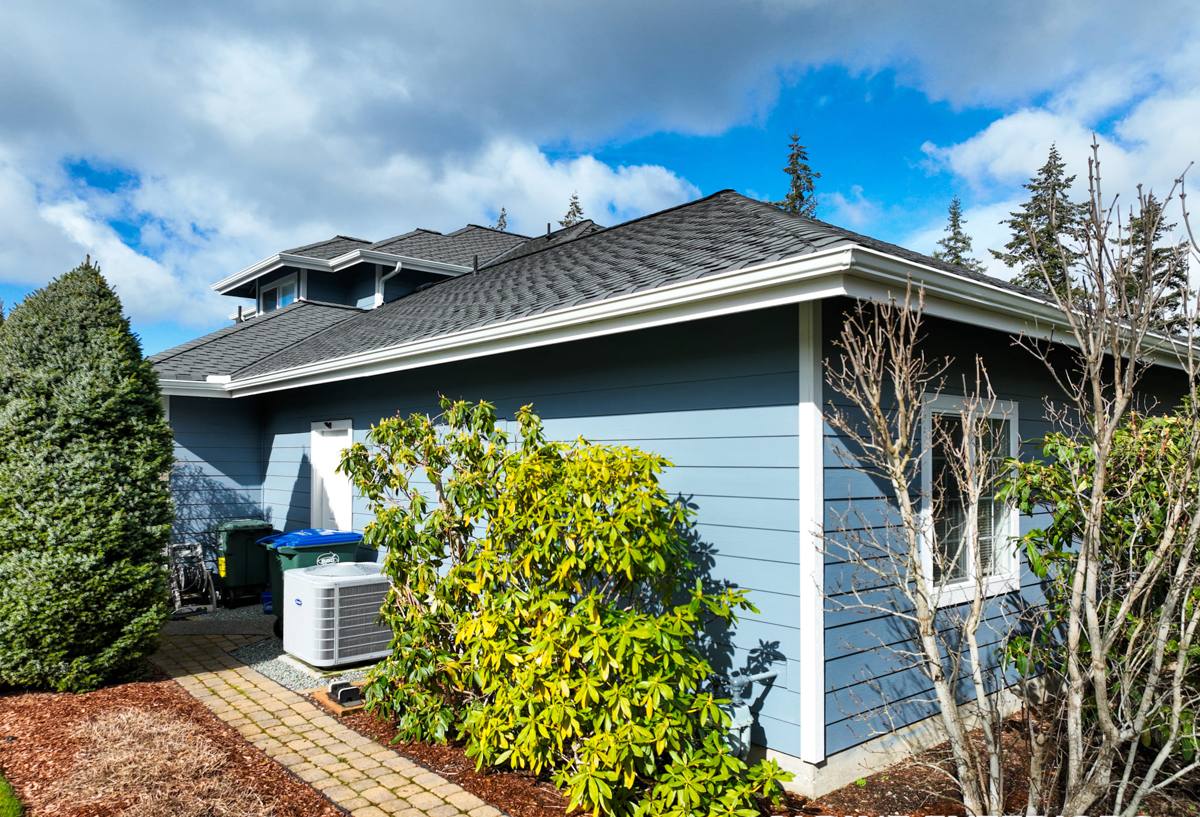
What Anacortes and Skagit County Climate Does to a Roof
Before talking about shingles or flashing, it helps to understand what a roof in this location is actually up against year-round:
- Salt air corrosion — metal fasteners, flashing, and vent components corrode faster near the water than they do even a short distance inland in Skagit County. Cheap or mismatched metal shows rust and pitting well before its expected lifespan.
- Driving rain — wind off the strait doesn't just fall on a roof, it pushes rain sideways and up under laps, edges, and penetrations. Underlayment coverage and flashing detail matter more here than on a calmer inland lot.
- Moss and algae growth — the long wet season and tree cover common around Ship Harbor keep roof surfaces damp for extended stretches, which is exactly what moss needs to establish. Left unchecked, moss lifts shingle edges and holds moisture against the roof deck.
- Wind exposure — being close to open water means gusts can be stronger and more sustained than a few blocks away. Shingle wind rating and nailing pattern aren't optional extras here.
None of this means a roof in Ship Harbor is doomed to fail early. It means the installation details that get skipped elsewhere — proper underlayment overlap, correct fastener metal, ventilation that actually balances — are the details that decide whether a roof makes it 20-plus years or starts showing problems in year seven.
Choosing the Right Roofing Material for This Location
There's no single "best" roofing material for every home — the right choice depends on the roof's pitch, the home's exposure, and the owner's budget and maintenance appetite. Here's how the common options stack up specifically for a marine, moss-prone location like Ship Harbor:
| Material | How It Handles Salt Air & Rain | Moss Resistance | Typical Lifespan |
|---|---|---|---|
| Architectural asphalt shingle | Good, with proper flashing and starter course detail | Moderate — benefits from algae-resistant granules | 25–30 years |
| Standing seam metal | Excellent when fasteners and flashing are marine-rated | High — sheds moss more easily than textured surfaces | 40–50+ years |
| Composite/synthetic shake | Good — doesn't absorb moisture like wood | Moderate to high depending on product | 30–50 years |
| Cedar shake (untreated) | Requires diligent maintenance in this climate | Low without regular treatment — high moss/moisture risk | Varies widely with upkeep |
We install architectural asphalt shingle and metal roofing most often on Ship Harbor homes because both give homeowners a strong balance of upfront cost, weather performance, and manageable long-term maintenance. We're happy to walk through the honest trade-offs of any material during your estimate — including where a product's maintenance burden or moisture behavior would work against a home in this specific location.
Algae-Resistant Shingles Aren't Marketing Fluff Here
Most major shingle lines now offer an algae-resistant (AR) option using copper-infused granules. In a drier, sunnier climate that upgrade is nice-to-have. In Ship Harbor's damp, shaded microclimate, it's worth specifying every time — it slows the black streaking and moss colonization that regular shingles pick up within a few wet seasons.
What a Correct New Roof Installation Involves
A new roof is more than laying shingles over what's there. Done right, here's the sequence that actually protects a home in this climate:
1. Full Tear-Off and Deck Inspection
We remove the existing roofing down to the deck rather than layering over it. This is the only way to find hidden moisture damage, soft or delaminated sheathing, and past flashing shortcuts — all of which are common on older Skagit County homes that have absorbed decades of wet-season exposure. Any compromised decking gets replaced before anything new goes down.
2. Ice-and-Water Shield at Vulnerable Areas
Eaves, valleys, and roof-to-wall transitions get self-adhering waterproof underlayment, not just standard felt. These are the spots where wind-driven rain and ice-dam-style backup (which does happen during Skagit County cold snaps) find their way in first.
3. Full Synthetic Underlayment
The rest of the deck gets a synthetic underlayment layer with correct overlap for the roof's pitch. This is the roof's backup water barrier if wind ever drives rain up under the shingle laps — a real possibility for homes with open exposure toward the water.
4. Corrosion-Resistant Flashing and Fasteners
Step flashing, valley metal, and fasteners are specified for salt-air exposure — not the cheapest stock option. This is one of the most commonly cut corners on roofs near the water, and it's the reason some "new" roofs show rust streaks and failing flashing seams within just a few years.
5. Balanced Ventilation
Intake at the eaves and exhaust at the ridge need to be sized to actually move air through the attic. Poor ventilation traps moisture, which accelerates deck rot from the inside and works against everything the underlayment and flashing are doing from the outside.
6. Correct Nailing Pattern and Shingle Exposure
Wind rating on a shingle package only holds if the installer follows the manufacturer's nailing pattern exactly — nail placement, count, and depth. This is a detail that's invisible once the roof is finished but decides whether shingles stay put in a strong gust off the strait.
Our Process for Ship Harbor Roof Replacements
- On-site inspection and estimate — we walk the roof (or use a ladder/drone assessment when access is limited), check the deck condition where visible, and give you a written scope and price.
- Material selection — we go over shingle, metal, or composite options suited to your home's exposure and budget, including color and warranty terms.
- Scheduling around the weather window — we plan installation for stretches of drier weather where possible, and use dry-in tarping to protect an open deck if conditions turn.
- Tear-off, deck repair, and installation — completed by our crew, not subcontracted out piecemeal.
- Site cleanup — magnetic sweep for nails, full debris haul-off, and gutter check to make sure nothing from the tear-off ended up clogging drainage.
- Final walk-through — we go over the finished roof with you before calling the job complete.
Why Local Roofing Experience Matters in Ship Harbor
A crew that's worked roofs across Anacortes and Skagit County already knows which flashing details fail first near the water, which shingle lines actually hold up under sustained damp exposure, and how local wind patterns off the strait should factor into fastener spec and shingle choice. That's knowledge that doesn't come from a manufacturer's install guide — it comes from seeing what happens to roofs in this exact microclimate over years, not just from a single job.
It also means straightforward permitting and inspection coordination with the City of Anacortes, and a crew that's easy to reach if a question comes up during or after the job — not a company that installed your roof once and moved on to the next county.
Signs Your Ship Harbor Home May Need a New Roof
- Shingles that are cupping, curling, or missing granules in patches
- Heavy moss growth that keeps returning within a season of cleaning
- Dark streaking across large areas of the roof, especially north-facing slopes
- Soft spots, sagging, or visible daylight in the attic where there shouldn't be any
- Water stains on interior ceilings or in the attic after wind-driven rain events
- A roof that's 20+ years old and hasn't had a full inspection recently
- Rusted flashing, vent boots, or fasteners visible from the ground
Any one of these on its own might just call for a repair. Several at once, or a roof already past its expected lifespan, usually means replacement is the more cost-effective path — patching an aging roof piecemeal often costs more over a few years than one correctly done installation.
What Affects the Cost of a New Roof Installation
| Factor | Why It Matters |
|---|---|
| Roof size and number of planes | More square footage and more valleys/hips mean more material and labor time |
| Deck condition | Rotted or delaminated sheathing found during tear-off adds repair cost but is essential to address |
| Material choice | Standing seam metal costs more upfront than asphalt shingle but spans a much longer lifespan |
| Roof pitch and access | Steep or hard-to-access roofs take longer and require more safety setup |
| Ventilation upgrades | Adding proper intake/exhaust venting where none existed is a worthwhile add, not just a line item |
| Flashing and underlayment spec | Marine-grade metal and full waterproof underlayment cost more than minimum-code materials but matter most in this location |
We give exact numbers only after seeing your roof in person — anyone quoting a firm price over the phone for a job like this is guessing.
Ready for an Honest Look at Your Roof?
If your Ship Harbor home has a roof that's aging, moss-covered, or just due for a straight answer about its condition, we'll come take a look and give you a clear, no-pressure estimate — no scare tactics, just what we actually see and what we'd recommend. Use the form below to get started.