 Anacortes
 Siding Replacement Built for West Anacortes Conditions
West Anacortes sits closer to open water than most neighborhoods in Skagit County, and that exposure shapes what a home's siding has to survive. Salt-laden air moves through the area more consistently here than a few miles inland, driving rain comes in sideways off the water during winter storms, and the region's long wet season keeps siding damp for weeks at a time. Add in the tree cover and shade that many West Anacortes lots have, and you get one of the more demanding siding environments in the Pacific Northwest — perfect conditions for moss, mildew, and slow moisture damage to take hold.
Siding replacement here isn't just about swapping old material for new. It's about choosing a product and an installation method that actually holds up to salt air, sustained moisture, and a moss season that can run eight months or longer. That's the lens we bring to every West Anacortes project.
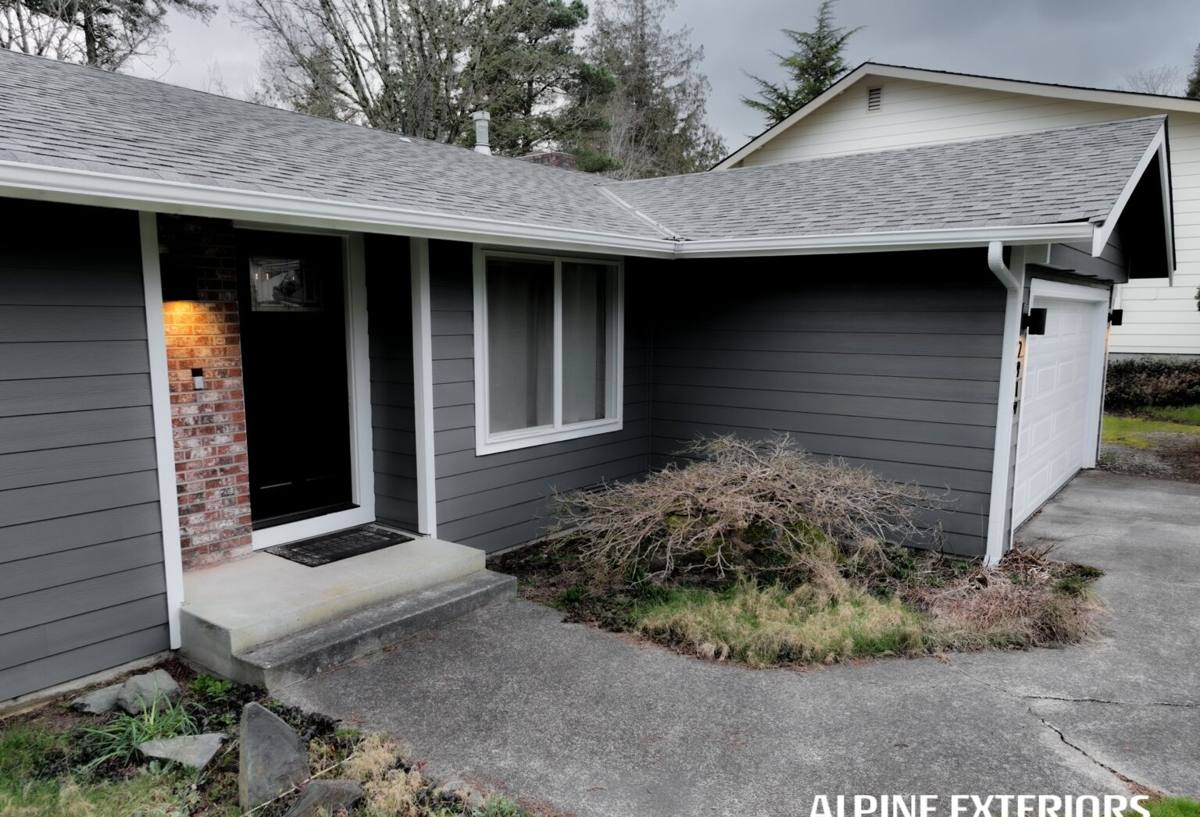
What Salt Air, Rain, and Moss Actually Do to Siding
Salt Air
Airborne salt is corrosive to metal fasteners, flashing, and trim, and it accelerates the breakdown of finishes that aren't formulated to resist it. Over years, homes closer to the water tend to show fading, chalking, and fastener staining well before homes further inland, even when the siding material itself is identical.
Driving Rain
Western Washington's rain isn't just frequent — it's often wind-driven, which pushes water sideways into laps, seams, and butt joints instead of letting it run straight down. Siding and flashing details that work fine in a calm rain can fail in a wind-driven one, which is why lap spacing, caulking choices, and flashing sequence matter more here than in drier climates.
Moss and Sustained Moisture
Shaded, humid conditions are exactly what moss and mildew need to establish themselves on exterior surfaces. Moss holds moisture against the siding surface long after rain has stopped, which is hard on any material that isn't dimensionally stable or that absorbs water into its core. Left unaddressed, moss growth can trap enough moisture to accelerate rot in the substrate behind the siding, not just cosmetic staining on the surface.
How Common Siding Materials Hold Up in This Climate
Homeowners researching siding replacement often ask us to compare materials honestly. Here's how the main options typically perform under West Anacortes conditions:
| Material | Moisture Behavior | Moss/Mildew Resistance | Salt Air Durability | Long-Term Maintenance |
|---|---|---|---|---|
| Vinyl | Doesn't absorb water, but seams and laps can allow moisture behind panels | Surface growth is common in shade; panels don't rot but trap moisture against sheathing | Can become brittle and discolored faster in coastal air | Low, but limited repair options if warped or cracked |
| Cedar | Absorbs and releases moisture; prone to swelling and cupping | Highly susceptible without diligent upkeep | Weathers unevenly; needs regular refinishing | High — refinishing, caulking, and moisture checks needed regularly |
| Engineered Wood (LP SmartSide) | Wood-based core is vulnerable if moisture reaches cut edges or fastener points | Requires consistent maintenance to prevent edge swelling | Factory finish helps, but edge sealing is critical | Moderate — edge sealing and caulk maintenance are non-negotiable |
| James Hardie Fiber Cement | Engineered for moisture resistance; won't rot or swell from water exposure | Non-organic composition resists moss-driven decay of the material itself | Factory ColorPlus finish resists fading and chalking in coastal air | Low — periodic washing, no refinishing cycle |
This is why we install James Hardie fiber cement exclusively. It isn't that other products can't be installed correctly — it's that fiber cement's non-combustible, moisture-stable composition matches what this specific climate demands, and we'd rather stand behind one product we trust fully than offer several with different long-term trade-offs.
Signs a West Anacortes Home Needs Siding Replacement
Because moisture damage often starts behind the siding before it's visible on the surface, it's worth checking for these signs before small problems become structural ones:
- Persistent moss or dark streaking that returns shortly after cleaning
- Soft spots when pressing on siding, especially near the bottom courses and around windows
- Visible warping, cupping, or separation at panel seams
- Paint that's peeling, bubbling, or failing faster than it should between repaints
- Rising interior heating costs, which can point to compromised insulation behind failing siding
- Visible gaps at trim, corners, or window and door surrounds
- Fastener staining or corrosion showing through the siding surface
Any one of these can be a minor fix. Several together, especially on the sides of the house most exposed to weather, usually mean the siding system as a whole is past the point where patching makes sense.
What a Correct Siding Replacement Job Involves
Replacing siding correctly is as much about what's underneath as what's visible. A rushed tear-off-and-reinstall can leave a house looking new while the same moisture problems continue underneath. A proper job includes:
Full Tear-Off and Inspection
Removing the old siding down to the sheathing so the crew can actually see the condition of the wall — not guess at it. This is when hidden rot or moisture damage from the old system gets found and addressed, rather than sealed back up under new siding.
Water-Resistive Barrier and Flashing
A correctly lapped weather barrier and properly sequenced flashing at every window, door, and penetration is what actually keeps wind-driven rain out — the siding itself is the second line of defense, not the first.
Manufacturer-Spec Installation
James Hardie's installation instructions specify fastener type and spacing, minimum clearances from grade and roof lines, and caulking requirements at butt joints. Skipping these details is the single biggest reason fiber cement siding underperforms — the product isn't the problem, the installation is.
Trim, Caulking, and Finish Work
Corner boards, trim, and caulking need to be sized and sealed to shed water away from seams, not just look finished from the curb.
Our Process for West Anacortes Projects
- On-site assessment — we walk the exterior, check for moisture and rot at vulnerable points, and evaluate sun/shade exposure and drainage around the home.
- Written scope and estimate — a clear breakdown of what's being replaced, what product and colors are proposed, and what the work includes, with no vague allowances.
- Tear-off and substrate repair — old siding removed, sheathing inspected, and any damaged material replaced before anything new goes up.
- Weather barrier and flashing installation — done to manufacturer and code specifications before siding goes on.
- James Hardie installation — panels, planks, or shingles installed per Hardie's fastening and clearance requirements for our climate zone.
- Final trim, caulking, and walkthrough — finish details completed and reviewed with the homeowner before we consider the job done.
Cost Factors for Siding Replacement
Every home is different, so we avoid quoting numbers before seeing the actual scope of work. That said, these are the factors that most influence the final cost:
| Factor | Why It Matters |
|---|---|
| Extent of substrate repair | Hidden rot found during tear-off adds material and labor beyond the base siding cost |
| Home size and number of stories | More square footage and taller walls mean more material, labor, and equipment needs |
| Siding profile (lap, shingle, panel) | Different Hardie profiles have different material and labor costs per square foot |
| Trim and detail work | Homes with more corners, windows, and architectural detail take more time to trim out correctly |
| Color and finish | Factory ColorPlus finishes vs. field-painted siding affect both cost and long-term maintenance |
| Access and site conditions | Sloped lots, tight side yards, or landscaping near the house can add labor time |
Why Local Experience in West Anacortes Matters
A crew that's worked in West Anacortes specifically has already seen how salt air, wind direction off the water, and heavy shade combine on real houses in this part of town — not just in general Pacific Northwest terms. That experience shows up in small decisions: where to add extra flashing attention, which sides of a house need more aggressive moss prevention, and how to sequence a tear-off around this area's wetter stretches of the year. It's the difference between a crew that's installed siding somewhere rainy and one that's installed it on the specific streets and lot conditions found here in Skagit County.
After Your Siding Is Replaced
James Hardie siding is low-maintenance, not no-maintenance. A periodic rinse to keep moss and organic buildup from establishing, an annual check of caulking at trim and penetrations, and prompt attention to any landscaping that's grown up against the siding will help it perform for decades in this climate. None of this compares to the refinishing and edge-sealing cycles that wood-based or engineered wood products require here.
If your West Anacortes home is showing signs of aging siding, or you're planning ahead rather than waiting for a problem, we're happy to take a look and walk you through what we see — no pressure, no obligation. Request a free estimate below and we'll schedule a time to assess your home in person.