 Anacortes
 Roofing on Similk Beach: A Different Set of Conditions
Similk Beach sits along Similk Bay on the Skagit County side of Fidalgo Island, close to the Deception Pass corridor — open water on one side, dense fir and cedar cover on the other. That combination puts a roof through more than most inland homes ever see. Salt-laden air moves in off the bay and works on exposed metal fasteners and flashing. Wind-driven rain off the strait doesn't just fall straight down; it gets pushed sideways under shingle edges and around vents. And the tree cover that makes the area beautiful also means shade, damp debris, and a long moss season that inland Skagit County roofs don't deal with nearly as much.
None of this means a roof here is doomed to fail early. It means the repair has to account for those specific stresses, not just patch the visible problem. A roofer who mainly works subdivisions in Mount Vernon or Burlington and only occasionally comes out to the water may not think about wind-driven rain paths or salt corrosion the same way a crew that works this shoreline regularly does.
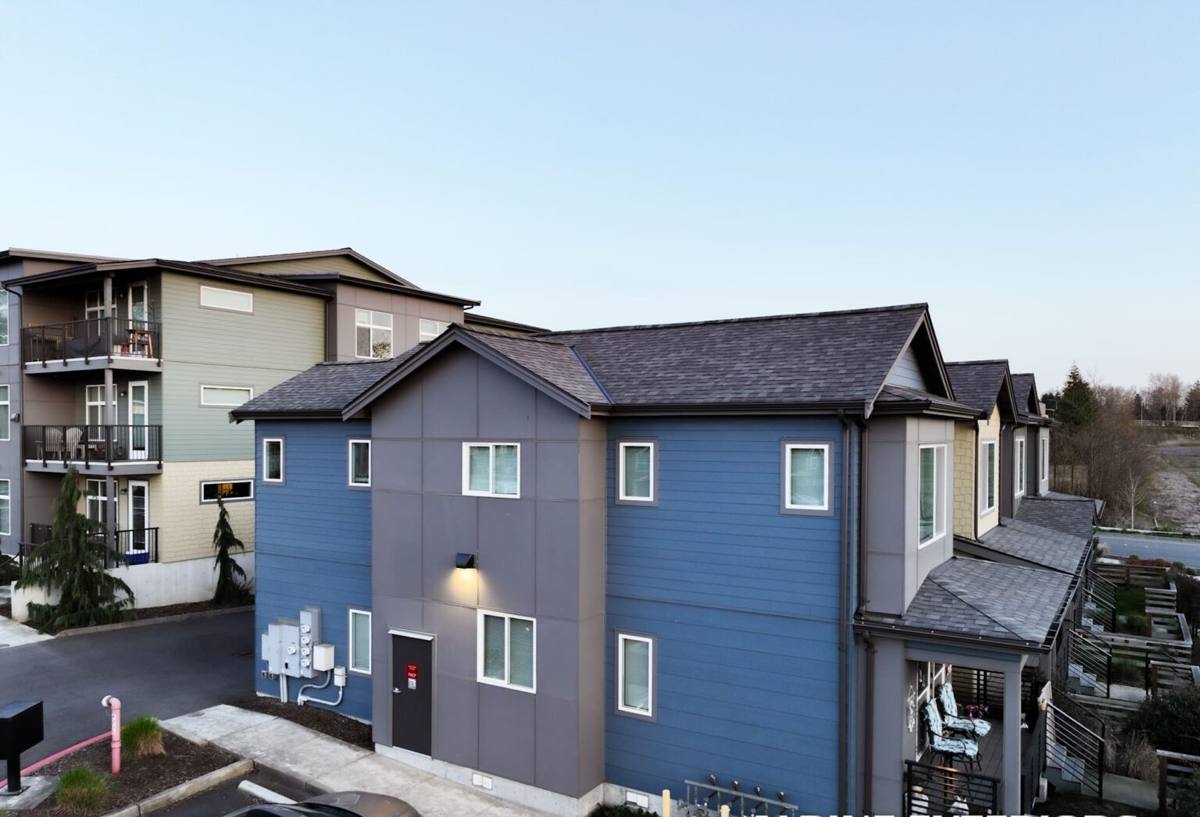
Signs a Similk Beach Roof Needs Repair
Most roof repairs get called in for one of a handful of reasons. Knowing which one you're dealing with helps set expectations before anyone gets on the roof.
- Active leaks — staining on ceilings or in the attic, especially after a windy rainstorm rather than a calm one, which points to wind-driven water intrusion rather than a simple failed seal.
- Moss buildup on north-facing slopes — thick moss holds moisture against the shingle surface and, over time, lifts shingle edges and shortens the life of the roofing material underneath it.
- Corroded or loose flashing — around chimneys, skylights, and roof-to-wall transitions, where salt air accelerates rust on lower-grade metal and fasteners.
- Granule loss — shingles that look bare or patchy, visible as grit collecting in gutters, which signals the shingle's UV and weather protection is wearing thin.
- Soft spots or sagging — usually a sign that water has already gotten past the surface layer and into the decking below.
- Missing or lifted shingles after a windstorm — common after the kind of gusty weather that comes through the strait a few times most winters.
A leak inside the house is often the last symptom to show up, not the first. By the time you see a stain, water has usually been finding its way in for a while.
Repair or Replace?
Not every roof problem calls for a full replacement, and a contractor who's honest with you will say so. The real question is whether the damage is isolated or systemic.
| Situation | Repair usually makes sense | Replacement usually makes sense |
|---|---|---|
| Age of roof | Under 15–18 years for asphalt, or well-maintained metal/cedar | Approaching or past expected material lifespan |
| Extent of damage | One slope, one leak source, isolated flashing failure | Multiple leaks, widespread granule loss, decking rot in several areas |
| Moss/algae condition | Surface growth, treatable and cleanable | Moss has been present for years and shingles are visibly deformed underneath it |
| Underlying decking | Solid, no soft spots when walked | Spongy, delaminating, or previously water-damaged in multiple spots |
What a Correct Repair Actually Involves
A repair that holds up on this stretch of coastline is more than swapping a few shingles. It starts with finding the actual entry point, which is not always directly above the stain inside — water travels along rafters and decking before it drips. From there, the work typically includes:
- Removing damaged shingles and inspecting the decking underneath for rot before covering anything back up
- Replacing compromised flashing with corrosion-resistant metal, particularly around chimneys, skylights, and any roof-to-wall step flashing exposed to salt air
- Checking and resealing vent boots and pipe collars, which are common failure points as rubber gaskets age faster near the coast
- Matching new shingles as closely as possible in style and color, understanding that some fading difference is normal on an older roof
- Clearing moss and treating the area to slow regrowth, rather than just covering over it
Skipping the decking inspection is the most common shortcut in a rushed repair, and it's the one that causes the same leak to reappear a year or two later under a fresh shingle.
Moss, Algae, and the Skagit County Tree Line
Moss doesn't just sit on a roof — its rhizoids work into the shingle surface, and as it grows it lifts the shingle edge just enough to let water underneath. On shaded, north-facing slopes near Similk Beach's tree cover, this can happen faster than homeowners expect. A repair in a moss-affected area should include physically removing the moss (not just power-washing, which can strip granules and force water under shingles), treating the surface, and ideally addressing what's feeding the moss — usually overhanging branches or a gutter that's holding standing water.
Our Repair Process
We keep the process straightforward because most homeowners just want the leak fixed correctly and want to know what's happening on their roof before it happens.
- Inspection and diagnosis. We get on the roof (not just the ground) to trace the actual leak path, check flashing, vents, and decking condition, and look at the whole roof — not just the spot you called about.
- Written scope and estimate. You get a clear explanation of what's damaged, what needs to be repaired, and what it will cost — no vague "we'll figure it out up there."
- Repair work. Damaged materials come off, decking gets checked and replaced if needed, flashing and underlayment go in correctly, and shingles are matched and installed to shed water the way the surrounding roof does.
- Cleanup and walk-through. Debris and old materials are removed from the property, and we show you what was done and why.
What Similk Beach Repairs Typically Cost
Every roof is different, but the biggest cost drivers on a coastal Skagit County repair tend to be the same handful of factors.
| Factor | Why it matters |
|---|---|
| Size of the affected area | A single flashing repair costs far less than a full slope of moss-damaged shingles |
| Decking condition | Rotted decking has to be cut out and replaced before new roofing goes on — this is the most common reason an estimate changes once the roof is opened up |
| Roof pitch and access | Steeper roofs and difficult access (trees, tight setbacks near the water) take more time and safety setup |
| Material match | Matching an older shingle style or a metal roof section can cost more than a straightforward asphalt patch |
| Flashing scope | Full flashing replacement around chimneys and walls costs more than spot-sealing, but lasts considerably longer in salt air |
We give a written estimate before any work starts, and if we open up the roof and find something beyond the original scope — most often rotted decking — we'll show you before proceeding, not after the invoice.
Why a Local Crew Matters Here
Working Similk Beach and the surrounding Fidalgo Island shoreline regularly means knowing which flashing details tend to fail first in salt air, which slopes hold moss longest given the tree line, and how the wind off the strait tends to drive rain into roof valleys and eaves that a roof in a drier, more sheltered part of the county wouldn't need to worry about as much. It also means being reachable when a windstorm knocks a shingle loose and you need someone who can actually get out to the water that week, not book you three weeks out because you're outside their normal service area.
Anacortes and the greater Skagit County region has a real range of roofing conditions — inland neighborhoods, wooded lots, and open-water sites like Similk Beach all age differently. A crew that treats every roof the same way, regardless of where it sits, is more likely to miss the details that matter for a house exposed to salt air and driving rain.
A Quick Checklist Before You Call Anyone
- Note when the leak shows up — during wind-driven storms, steady rain, or anytime — it helps narrow down the cause before an inspection
- Check the attic (if accessible) for staining, damp insulation, or daylight coming through the decking
- Look at gutters for excess granule buildup, which points to shingle wear
- Note any visible moss, especially on shaded slopes
- Ask any contractor for proof of WA state licensing and insurance before they get on your roof
- Get the scope of work in writing, not just a verbal price
Get a Straight Answer on Your Roof
If you're dealing with a leak, moss buildup, or storm damage on a Similk Beach roof, we're happy to come take a look and give you an honest read on what it needs — repair or otherwise. The estimate is free, there's no pressure, and you'll get a clear explanation of what we find. Use the form below to get in touch.