 Anacortes
 Why Skyline Roofs Take a Different Kind of Beating
Skyline sits up on the hill above Anacortes, with open exposure to the marine air coming off the water and the wind that comes with it. That view comes with a trade-off: roofs up here catch more wind-driven rain, more salt-laden air, and in a lot of cases more shade from mature trees than roofs down in more sheltered parts of town. Over the years, that combination shows up as moss on the north-facing slopes, corroded fasteners and flashing, and leaks that start small and spread quietly under the surface long before anyone notices a stain on a ceiling.
We've repaired roofs across Anacortes and Skagit County long enough to know that a roof repair up here isn't the same job as a roof repair in a dry inland climate. The materials, the sequence, and the details around flashing and ventilation all have to account for what this particular climate does to a roof, year after year.
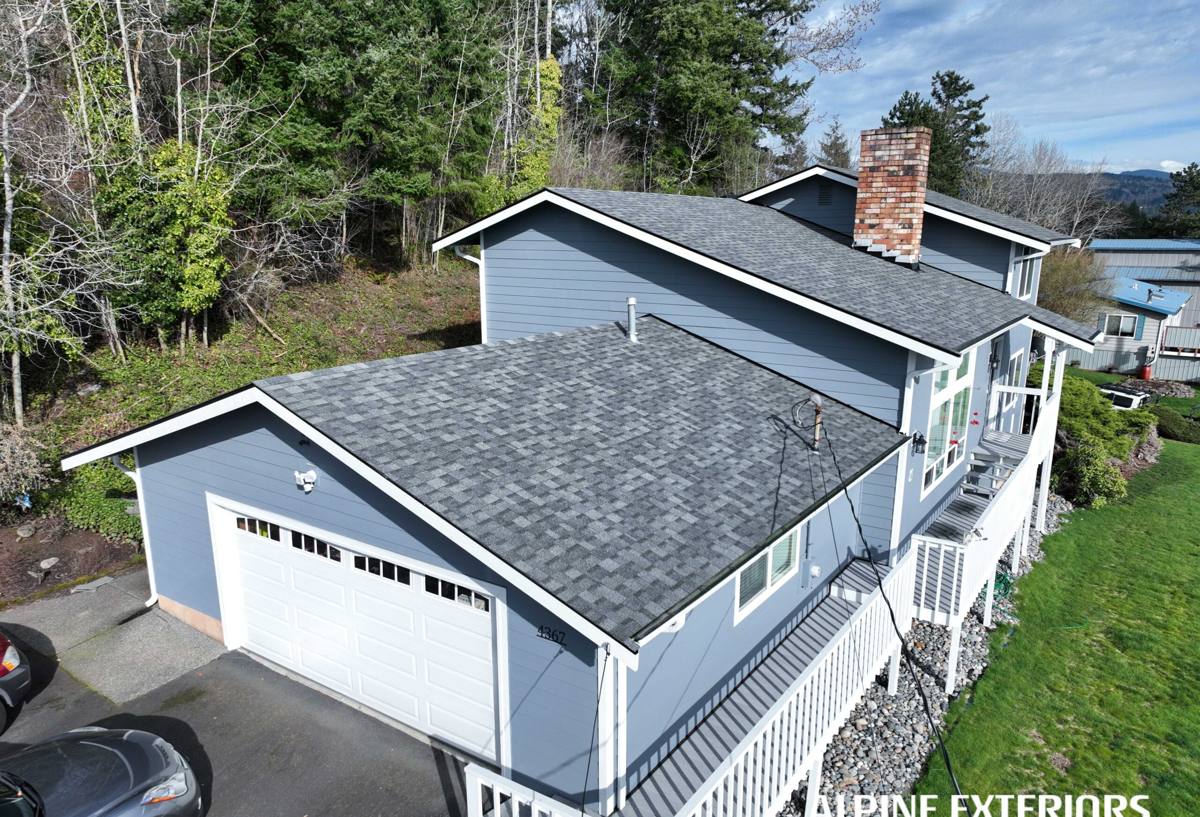
What Driving Rain and Salt Air Do to a Roof Over Time
Moss and Organic Growth
Shaded, north- and east-facing roof slopes hold moisture longer after a storm, and that moisture is exactly what moss needs to take hold. Moss doesn't just look bad — it lifts shingle tabs as it grows, holds water against the roofing material underneath, and works its root structure into seams and granule surfaces. A roof that looks fine from the driveway can have moss quietly prying open the exact spots most likely to leak.
Flashing and Fastener Corrosion
Salt air accelerates corrosion on any exposed metal — step flashing, valley metal, exposed roofing nails, and the metal collars on older vent boots. Once flashing starts to corrode at the seams or edges, it stops shedding water the way it's supposed to, and that's one of the most common sources of a leak that seems to show up "out of nowhere" after a hard rain.
Underlayment and Sheathing Risk
Anacortes gets a steady run of driving rain, and wind off the water can push that rain sideways under shingle edges and around penetrations like pipes and skylights. If the underlayment is old, was lapped incorrectly, or was never upgraded to a self-adhering membrane in the vulnerable spots — valleys, eaves, around chimneys — water eventually finds its way to the roof sheathing. Left alone, that turns into soft spots and rot, and a repair that's a lot more involved than it needed to be if it had been caught earlier.
Common Roof Repair Needs We See on Skyline Homes
Every roof is different, but certain repair calls come up again and again on homes in this part of Anacortes. The list below covers what we're typically asked to look at first:
- Moss removal and treatment on shaded slopes, with shingle or metal repair where moss has already lifted material at the edges
- Flashing replacement at chimneys, skylights, and roof-to-wall transitions where corrosion or the original installation has started to fail
- Valley repair, since wind-driven rain concentrates in valleys and older valley metal or woven-shingle valleys tend to wear thin there first
- Vent boot and pipe collar replacement — rubber boots crack with age and metal collars corrode faster in salt air than they would further inland
- Repairs around skylights, which are common on view-oriented homes and add extra seams that need to be flashed correctly
- Gutter and roof-edge repair where debris from nearby trees backs up water at the eaves and pushes it under the first course of shingles
What a Correct Roof Repair Actually Involves
Diagnosis Before Patching
A roof leak rarely shows up directly above where the water is actually getting in. Water travels along rafters, along the underside of the sheathing, and sometimes several feet before it finds a path through insulation and drywall. A correct repair starts with tracing the real entry point, not just sealing over the spot where the stain appeared. That usually means getting on the roof to check flashing, penetrations, and shingle condition around the suspected area, and in some cases checking the attic or roof deck from underneath to confirm before any material comes off.
Matching Materials and Method
A repair that doesn't match the surrounding roofing — in material, in exposure, and in how it's fastened and flashed — tends to fail again at the seam between old and new. We match shingle type, color, and course exposure as closely as the existing roof allows, and we flash new work the same way we'd flash it on a full replacement: step flashing woven correctly at walls, proper counter-flashing, and self-adhering membrane in the areas most exposed to wind-driven rain. A patch that's sealed with caulk and hope isn't a repair — it's a delay.
Our Roof Repair Process
- Inspection and diagnosis. We get on the roof, identify the actual cause of the problem, and check nearby areas that see the same exposure — if moss or corrosion caused one leak, it's often working on a neighboring section too.
- Honest scope and estimate. We tell you what needs to be repaired now, what's worth watching, and what we'd flag as a future replacement item — not everything gets bundled into today's bill.
- Repair work. We remove and replace only the damaged material, tie new flashing and underlayment into the existing roof correctly, and match the surrounding shingles or panels as closely as possible.
- Cleanup and check. We clear debris and old material from the site and gutters, and walk the repaired area with you before we consider the job done.
Repair vs. Replacement: How We Help You Decide
Not every roof problem on a Skyline home needs a full replacement, and we're not going to tell you it does. The table below covers the factors that actually drive that decision.
| Factor | Points Toward Repair | Points Toward Replacement |
|---|---|---|
| Roof age | Roof is within its expected service life | Roof is near or past the end of its material's typical lifespan |
| Extent of damage | Damage is isolated to one flashing detail, valley, or section | Multiple areas showing moss damage, corrosion, or wear at once |
| Underlayment condition | Underlayment beneath the damaged area is intact | Underlayment is brittle, torn, or missing in exposed areas |
| Sheathing condition | Roof deck underneath is solid | Soft, rotted, or delaminated sheathing found during inspection |
| Recurring leaks | First occurrence in this area | Same area has been patched more than once already |
Moss and Debris: Prevention Between Repairs
A repair holds up longer when the conditions that caused the damage in the first place don't come right back. A few habits go a long way on a Skyline roof:
- Keep gutters and roof valleys clear of needles and leaf debris, especially heading into the fall rains
- Have moss treated before it establishes on shaded slopes, rather than after it's already lifted material
- Trim back tree limbs that keep sections of the roof shaded and damp longer than the rest
- Have flashing and vent boots checked every couple of years, since corrosion and cracking happen gradually and aren't always visible from the ground
- Address small leaks as soon as they're noticed — a small flashing repair now is a lot less than sheathing replacement later
Why a Crew That Already Works Skyline Matters
Roof pitch, access, and exposure vary a lot across Anacortes, and Skyline has its own quirks — homes situated to take in the view often have more roof planes, more skylights, and steeper or more complex rooflines than a simple gable roof down in town. A crew that's already worked roofs in this neighborhood knows what to expect before they even get up there: which details tend to fail first in this exposure, where moss builds up fastest, and how the wind off the water behaves against a given roof orientation. That familiarity shows up in a faster, more accurate diagnosis and fewer surprises once the repair is underway.
It also matters for straightforward, practical reasons — a local crew can get out to look at a leak quickly, doesn't have to guess at Skagit County permitting or inspection requirements when a job calls for them, and is still around the following year if a related issue turns up somewhere else on the roof.
Cost Factors in a Skyline Roof Repair
Roof repair costs vary a lot depending on what's actually wrong, so we won't put a number here that doesn't mean anything until we've seen the roof. In general, cost is driven by how much material has to come off and go back on, how many separate areas need attention, whether flashing or underlayment needs replacing along with shingles or panels, and how accessible the roof is. A single flashing repair is a modest job; a roof with moss damage in several spots plus a failed valley is a bigger scope. We'll always walk you through what's driving the cost before any work starts, and we separate "needs fixing now" from "worth keeping an eye on" so you're not paying for more than the roof actually needs.
If you've got a leak, moss buildup, or a roof section that's been bothering you on your Skyline home, we're happy to take a look. Reach out for a free, no-pressure estimate — we'll tell you honestly what we find and what it would take to fix it right.