 Anacortes
 Windows in Skyline Take a Different Kind of Beating
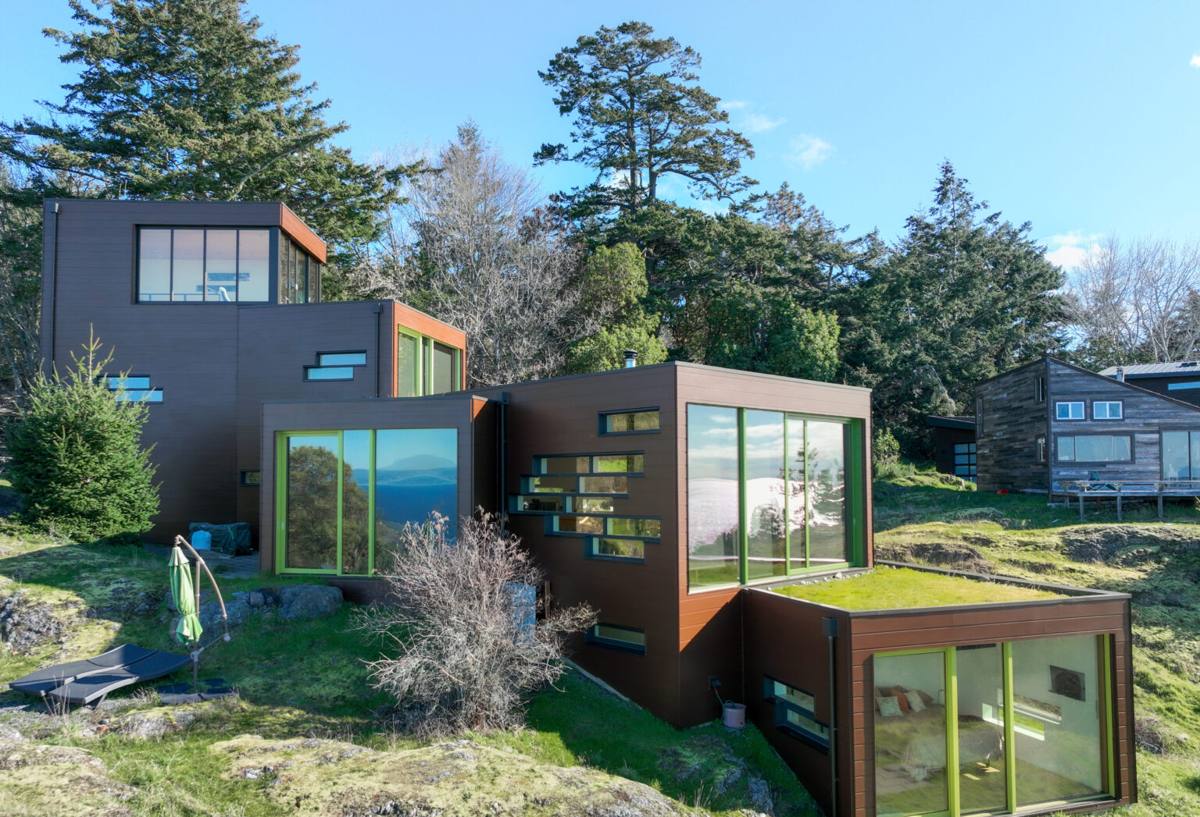
Skyline sits on the west side of Fidalgo Island, close enough to open water that homes here deal with a steadier dose of salt air, wind, and moisture than houses a few miles inland in Anacortes proper. That exposure doesn't show up overnight. It shows up two, five, ten years into a window's life, as hardware starts to bind, finishes chalk out, and small gaps around the frame turn into real water intrusion. A window installation done for a subdivision in a sheltered part of Skagit County and one done for a view lot in Skyline are not the same job, even if the window itself is identical off the shelf.
This page is about that one job, done right, for this one area: what the local climate actually does to windows, what a correct installation has to account for, and how we approach it on Skyline properties specifically.
What the Local Climate Does to Windows Over Time
Salt Air and Hardware
Airborne salt is corrosive to unprotected metal — hinges, cranks, balance systems, screws, and cheap cladding fasteners all take the hit faster near open water than they would a few miles inland. It's not dramatic; it's gradual pitting and stiffness that eventually shows up as a window that's hard to latch or a lock that no longer lines up cleanly. Frame material and hardware quality matter more here than in a lot of other parts of Skagit County.
Wind-Driven Rain
Anacortes gets a lot of rain that doesn't fall straight down — it comes in sideways off the water during storms. A window that's watertight in a light, still rain can still leak under wind-driven rain if the flashing details weren't built for it. This is the single biggest reason a window that "looks fine" from the outside can still be letting water into the wall cavity behind it.
The Long Moss and Mildew Season
Cool, damp, low-light stretches are long here, and anywhere on a house that stays shaded or doesn't get much airflow — under eaves, in corners, on north-facing walls — tends to grow moss, algae, and mildew faster than it would in a drier climate. On windows this shows up as green or black staining on sills, trim, and caulk lines, and it's a sign that water is sitting somewhere it shouldn't be lingering.
What a Correct Window Installation Actually Involves
A window installation is not "remove old window, screw in new window, caulk the edges." Done correctly, especially in a wet, wind-exposed area like Skyline, it's a sequence of water-management steps where skipping any one of them undermines the rest.
Flashing and Water Management
The sill needs a sloped pan or flashing so any water that gets past the exterior seal drains back out instead of pooling on the frame. Flashing tape needs to integrate with the house's weather-resistive barrier in the correct shingle-lap order — head flashing overlapping the barrier above it, side flashing overlapping the sill flashing — so water is always directed down and out, never trapped behind the cladding.
Fit, Shimming, and Air Sealing
A window that's out of square or unevenly shimmed will bind, won't latch cleanly, and will develop gaps that let both air and water through. Low-expansion foam or backer rod and sealant go around the frame perimeter on the interior side, with weep paths left open at the exterior sill so any incidental water can still escape rather than get sealed in.
Interior and Exterior Finish
Interior trim gets reset cleanly, and exterior trim and caulk joints get finished with a product rated for the movement and moisture cycling this climate puts them through. A cheap or misapplied exterior sealant is often the first thing to fail here, well before the window unit itself.
Choosing a Window for a Skyline Property
Frame material is a bigger decision near open water than it is elsewhere. Here's how the common options actually hold up under salt air and constant moisture cycling, based on how they perform and what they cost to own over time — not just what they cost to buy.
| Frame Material | Coastal/Salt-Air Performance | Maintenance Burden | Typical Cost Range |
|---|---|---|---|
| Vinyl | Good — won't corrode or rot; UV-stable modern formulations hold up well | Low | $ |
| Fiberglass | Very good — dimensionally stable, resists warping from moisture and temperature swings | Low | $$$ |
| Wood-clad | Fair — cladding protects the exterior face, but any breach exposes wood to rot risk | Higher — finish and seals need periodic attention | $$$ |
| Bare wood | Poor for this exposure without diligent upkeep | High | $$–$$$ |
We don't push wood-clad or bare wood frames for exposed Skyline properties as a first recommendation — not because the product is bad, but because the maintenance schedule needed to keep it watertight in this climate is demanding, and a missed year of upkeep is exactly when moisture gets behind the cladding. If a homeowner wants that look and is committed to the upkeep, we'll install it correctly and tell them plainly what that upkeep looks like.
Our Installation Process
- On-site assessment: we look at each opening individually — sun and wind exposure, existing flashing condition, and any signs of past water intrusion around the frame or sill.
- Careful removal: old units come out without tearing up more of the wall than necessary, and we check the framing and sheathing underneath for hidden rot before anything new goes in.
- Opening prep: any damaged framing or sheathing gets addressed before the new window goes in — installing a new window over a compromised opening just hides the problem.
- Flashing and sill pan installation: built to shed water outward, integrated with the existing weather barrier.
- Setting, shimming, and fastening: the unit is leveled, plumbed, and squared before it's permanently fastened.
- Sealing and insulating: low-expansion foam and sealant around the perimeter, with weep paths preserved.
- Interior and exterior trim: reset and finished to match the surrounding siding and trim.
- Final check: operation, latching, and a visual water-path check before we call it done.
Replacement vs. New Construction Openings
Skyline has a mix of older homes with original openings and newer builds. The approach differs:
Replacement Windows in Existing Openings
Where the existing frame and flashing are sound, an insert replacement can go into the existing opening without disturbing the surrounding siding. This is faster and less invasive, but it only works if the opening's water management is already solid — which is why we check it rather than assume it.
Full-Frame Replacement
Where there's evidence of past leaks, rot, or the existing flashing simply isn't up to the job, we recommend removing down to the rough opening and rebuilding the flashing system from scratch. It costs more up front but it's the only way to actually fix a chronic leak rather than reseal around it.
Why a Crew That Already Works Skyline Matters
A contractor who mostly works drier, more sheltered parts of Skagit County can install a window that's technically correct and still underperform once it's facing wind off the water. Working Skyline regularly means we've already seen how exposure, orientation, and the local moss-and-mildew cycle play out on real houses here — which openings tend to see the worst wind-driven rain, which finishes hold up and which don't, and what past installations around the neighborhood have gotten wrong. That's the kind of judgment that doesn't come from a spec sheet.
It also means straightforward logistics: we're not routing a crew and materials across the county for a small job, which keeps scheduling realistic and lets us come back quickly if a follow-up adjustment is ever needed.
After Installation: What to Keep an Eye On
A correctly installed window is close to maintenance-free, but a little seasonal attention goes a long way in this climate:
- Rinse salt residue off frames and glass a few times a year, especially after storms
- Check exterior caulk lines annually for cracking or separation, particularly on sun- and wind-exposed sides
- Keep weep holes at the base of the frame clear of dirt and debris so water can drain
- Watch for moss or dark staining developing on sills or trim — it's a sign moisture is sitting rather than shedding
- Operate hardware (locks, cranks, latches) periodically even on windows you rarely open, to keep mechanisms from seizing
- Address any soft or discolored trim promptly rather than waiting — it's cheaper to catch early
If you're weighing a window replacement or dealing with a leak, drafty opening, or aging frames on a Skyline property, we're happy to take a look and give you a straightforward, no-pressure estimate — just fill out the form below.