 Anacortes
 Building Decks That Hold Up in West Anacortes' Marine Climate
West Anacortes sits closer to the water than most of Fidalgo Island, which means the homes here take the brunt of what Rosario Strait and Guemes Channel send inland. A deck built with a generic, one-size-fits-all approach might look fine the first summer, but within a few seasons the fasteners start to bleed rust, the boards cup, and a green film creeps across every shaded board. A deck built correctly for this specific stretch of Anacortes handles all of that without turning into a maintenance headache.
This page focuses on custom deck construction for homes in and around West Anacortes — what the local climate actually does to a deck over time, what a properly built one looks like, and how we approach these projects so they're still solid a decade or two from now.
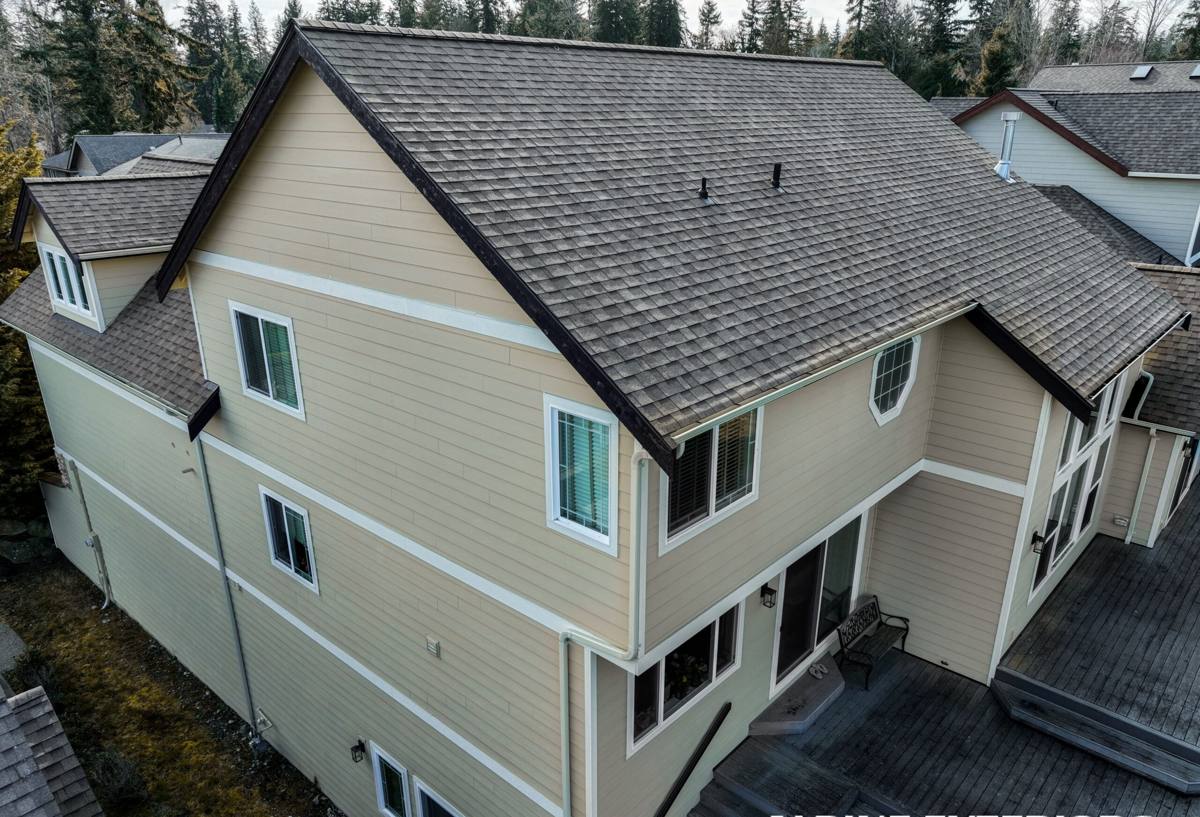
What West Anacortes' Weather Does to an Outdoor Deck
Salt Air and Corrosion
Homes closer to the water deal with airborne salt that settles on every exposed surface, including deck hardware. Standard zinc-coated fasteners and connectors can start showing surface rust within a couple of years in this kind of exposure, and once a fastener starts corroding, it weakens the structural connection it's holding together — not just its appearance. This is the single most common shortcut we see on decks that were built by crews unfamiliar with coastal conditions.
Driving Rain and Wind Exposure
Wind off the water doesn't just bring rain straight down — it drives it sideways, into ledger boards, under railing caps, and into any seam that isn't properly flashed or sealed. Over time, wind-driven rain finds every gap a builder left unsealed. A deck attached to the house needs flashing detail at the ledger board that assumes rain will hit it from an angle, not just from above.
Moss Season
Anacortes gets a long stretch of wet, mild weather every year, and anywhere shade and moisture combine — under tree canopy, on the north side of a house, in low spots that hold water — moss and algae take hold. On a deck, that means slick boards, stained wood, and surfaces that trap moisture against the decking material instead of letting it dry out. Board spacing, airflow underneath the deck, and material choice all affect how bad this gets and how much work it takes to keep ahead of it.
Choosing the Right Decking Material
There's no single "best" decking material — the right choice depends on how much upkeep a homeowner wants to do and what the deck's exposure looks like. Here's how the common options compare for a West Anacortes property:
| Material | Performance in Salt Air & Rain | Moss/Algae Resistance | Maintenance | Typical Lifespan |
|---|---|---|---|---|
| Pressure-treated pine | Good if sealed regularly | Low — needs cleaning and treatment | Annual cleaning, periodic sealing | Roughly 15-20 years |
| Western red cedar | Naturally rot- and insect-resistant | Moderate — still needs care in shade | Periodic staining/sealing to hold color | Roughly 15-25 years |
| Capped composite | Excellent — doesn't absorb moisture | Good — cleans off with a rinse | Occasional washing, no sealing | Roughly 25-30+ years |
| PVC decking | Excellent — fully synthetic | Good to excellent | Lowest — soap and water | Roughly 25-30+ years |
Cedar and pressure-treated wood cost less up front and give a more traditional look, but they ask for regular attention — cleaning, brightening, and resealing — to keep moss and gray weathering at bay. Composite and PVC cost more initially but shrug off moisture and salt exposure with far less ongoing work, which matters a lot in a climate that gives you eight or nine wet months a year. We'll walk through the honest trade-offs for your specific site and sun exposure rather than pushing one material across the board.
What a Correctly Built Deck Involves
The decking boards are the part everyone sees, but most deck failures start underneath, in details that are invisible once the project is finished. A deck built right for this area includes:
- Proper footings — sized and set below frost depth, on undisturbed soil, not resting on grade or a stack of pavers.
- Ledger board flashing — a self-adhering membrane and metal flashing that directs water away from the house rim joist, installed to shed wind-driven rain, not just vertical rain.
- Corrosion-resistant fasteners and hardware — stainless steel or heavy hot-dip galvanized connectors, joist hangers, and screws rated for coastal/marine exposure, not standard interior-grade hardware.
- Correct joist spacing and sizing — matched to the decking material's span rating, since composite and PVC often require tighter joist spacing than wood.
- Drainage slope — a slight pitch away from the house so water doesn't pool against the ledger or siding.
- Board gapping and airflow — spacing that lets boards dry between rain events, plus enough clearance underneath the deck for air to move instead of trapping moisture.
- Railing and stair code compliance — height, baluster spacing, and guard requirements built to code, not just to what looks acceptable.
Skip any one of these and the deck may look fine for a season or two, but the failures that show up later — soft ledger boards, rusted-through hangers, boards that never fully dry — almost always trace back to one of these details being cut short during construction.
Our Process for a West Anacortes Deck Project
- Site visit and assessment. We look at sun exposure, prevailing wind and rain direction, drainage, and how close the site is to the water, since that changes which hardware and materials make sense.
- Design and material selection. We talk through layout, size, and material options honestly — including what each one will actually cost you in upkeep over the years, not just at installation.
- Permitting. We handle the permit application and coordinate any required inspections so the project meets local building code from the ground up.
- Construction. Footings, framing, flashing, decking, and railing are installed in sequence, with the coastal-grade hardware and flashing details built in from the start rather than added as an afterthought.
- Final walkthrough. We go over the finished deck together, including basic care guidance specific to the material you chose, so you know what upkeep — if any — to expect going into the wetter months.
Permits and Local Requirements
Most new decks and many deck replacements in Anacortes and unincorporated Skagit County require a building permit, and setback rules can vary depending on your lot and how close the structure sits to a property line or the water. Rules and requirements change and depend on your specific parcel, so rather than guess at what applies to your property, we pull the actual requirements for your address as part of the design phase and build the permit application around them. This keeps the project from stalling out mid-build over a missed step.
Maintaining Your Deck Through Moss Season
Whatever material you choose, a little seasonal attention goes a long way toward keeping a West Anacortes deck looking and performing the way it should. A simple yearly routine covers most of it:
- Sweep debris and standing leaves off the deck regularly through fall, since trapped organic matter is what feeds moss and algae growth.
- Rinse or wash the deck surface at least once before the wet season sets in, and again partway through if it's heavily shaded.
- Check that gaps between boards are clear of debris so water can drain through instead of pooling.
- Inspect railings, stairs, and ledger flashing once a year for loose fasteners, soft spots, or signs of rust bleed.
- Reseal wood decking on the manufacturer's recommended schedule — waiting too long lets moisture get into the wood before the next coat goes on.
- Trim back overhanging branches where practical to cut down on shade and falling debris that accelerate moss growth.
None of this requires a major time investment, but skipping it for a few years in a row is how a deck that was built correctly still ends up needing early repairs.
Why Hire a Crew That Already Works in West Anacortes
A deck contractor who mostly builds inland or in drier climates will often default to standard hardware, standard flashing details, and standard board spacing — because that's what works where they usually build. None of those defaults hold up the same way this close to the water. A crew that regularly works West Anacortes projects already knows which hardware grade to spec, how the wind typically drives rain against a ledger board on this side of the island, and which materials actually perform the way homeowners expect once the rainy season sets in. That local familiarity shows up less in the finished look of the deck and more in how it holds up five, ten, and twenty years down the road.
Get a Free Estimate
If you're planning a new deck or looking to replace one that hasn't held up to the weather here, we're happy to take a look and walk you through your options — materials, layout, and what it'll take to build it right for West Anacortes conditions. Use the form below to request a free, no-pressure estimate.