 Anacortes
 Storm Damage Roof Repair Built for West Anacortes Conditions
West Anacortes sits close enough to the water that homes here take a different kind of beating than roofs even a few miles inland. Salt-laden wind off Rosario Strait and Guemes Channel, driving winter rain that comes in sideways during a southwesterly blow, and a moss season that can run eight or nine months out of the year all combine to shorten the working life of roofing materials and to hide damage in places a casual glance won't catch. When a storm rolls through Skagit County, the question isn't just "did anything blow off" — it's whether wind-driven rain found its way under flashing, whether fasteners backed out under repeated gusts, and whether moss and debris are trapping moisture against the deck where you can't see it from the ground.
This page covers what storm damage roof repair actually involves for homes in this part of Anacortes, what we look for, and how we approach the work so you're not paying twice for the same problem.
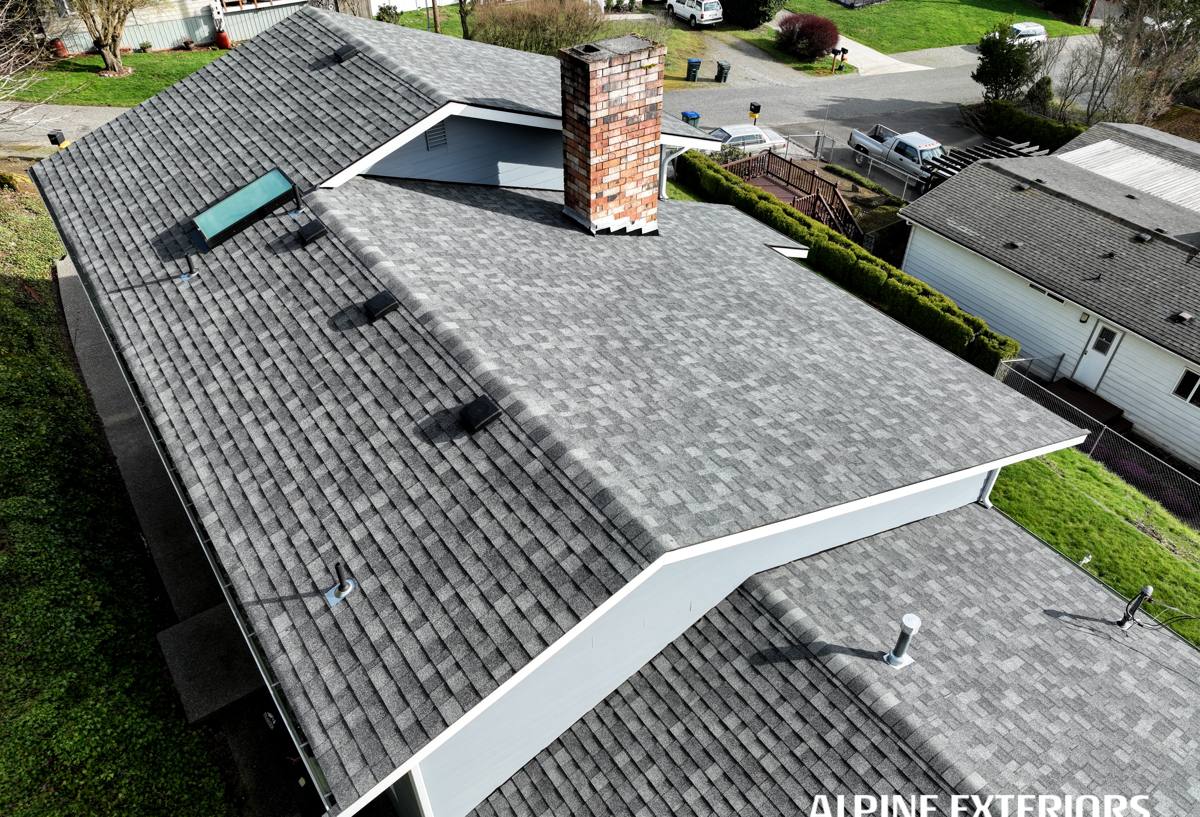
Why Storms Hit Differently Here
Anacortes doesn't get the hail and tornado damage you'd see further east, but it gets something arguably harder on a roof over time: sustained wind combined with constant moisture. A few things specific to West Anacortes and the surrounding Skagit County coastline matter for storm repair work:
- Salt air accelerates corrosion on exposed fasteners, flashing, and metal roof edges — a nail that's rusted through loses its grip long before the shingle around it looks worn.
- Wind-driven rain off the water doesn't fall straight down; it gets pushed under shingle tabs, ridge caps, and flashing laps that would shed a normal rain fine.
- Moss and organic buildup hold moisture against the roof deck for weeks after a storm has passed, which turns a small leak into a rot problem if it's not addressed promptly.
- Mature tree cover common in West Anacortes neighborhoods means storms bring down branches and debris, not just wind — impact damage is common alongside wind damage.
None of this means West Anacortes roofs are doomed — it means a repair has to account for these conditions instead of treating storm damage the same way a contractor in a dry inland climate would.
What a Correct Storm Damage Assessment Looks Like
Above the Deck
We start with a full visual inspection of the roof surface, not just the area where damage was reported. Wind damage is rarely confined to one spot — if a gust was strong enough to lift shingles on one slope, it's worth checking ridge caps, hip lines, and valleys for the same stress. We look for lifted or cracked shingle tabs, exposed or missing granules, bent or lifted flashing at chimneys and sidewalls, and any spots where moss growth has separated shingle edges from the deck below.
Below the Surface
Storm damage that matters most is often the damage you can't see from the ground or even from the roof surface itself. Water that got under a flashing lap during a storm can travel along the deck before it shows up as a stain on your ceiling — sometimes feet away from where it entered. Where we suspect water intrusion, we check the attic or roof deck from the underside where accessible, looking for staining, soft spots, or active moisture, so a repair addresses where the water is actually going, not just where it's showing up inside the house.
Documentation
If you're planning to file an insurance claim, thorough documentation matters as much as the repair itself. We photograph damage before any work begins, note the likely cause and extent, and provide a written scope that an adjuster can work from. This doesn't replace your insurer's own inspection, but it gives you a clear, honest record instead of a vague verbal description after the fact.
Common Storm Repairs We Handle
| Damage Type | Typical Cause Here | Repair Approach |
|---|---|---|
| Lifted or missing shingles | Sustained wind gusts, aged fasteners weakened by salt corrosion | Replace affected shingles, re-secure surrounding tabs, check adhesive seal strips |
| Flashing failure at chimneys/walls | Wind-driven rain forcing water under flashing laps | Remove and reset flashing with proper overlap and sealant, not just caulk over the gap |
| Impact damage from branches/debris | Mature trees common in West Anacortes yards | Assess deck for cracking beneath the shingle, replace damaged sections down to sound decking |
| Moss-related lifting or rot | Extended damp season trapping moisture against the deck | Clear growth, assess deck condition, treat and replace only what's actually compromised |
| Backed-out or corroded fasteners | Salt air corrosion combined with wind cycling | Re-fasten with corrosion-resistant hardware appropriate for coastal exposure |
Our Process, Start to Finish
1. Initial Assessment
We inspect the full roof, not just the reported problem area, and give you a straightforward explanation of what we found — including if the damage is minor enough that it doesn't need a full repair.
2. Written Scope and Estimate
You get a clear breakdown of what needs to be done, why, and what it costs before any work starts. If insurance is involved, this scope is written in a form that supports your claim.
3. Temporary Protection When Needed
If a storm has left your roof actively leaking or exposed, our first priority is stopping further water intrusion — tarping or temporary sealing — before the permanent repair is scheduled, especially given how quickly sustained rain can turn a small opening into a bigger problem.
4. The Repair
We match materials to what's already on your roof where possible, and use fasteners and flashing details suited to coastal exposure rather than whatever is cheapest. Repairs are tied into the surrounding roof system correctly — new flashing laps under the course above it, shingles are sealed and nailed to hold against wind, not just tacked down to look right from the ground.
5. Final Walkthrough
We show you what was done and why, and flag anything else on the roof worth keeping an eye on — no pressure to buy work that isn't needed yet.
Repair or Replace? An Honest Framework
Not every storm-damaged roof needs full replacement, and not every repair is a good long-term investment. A few honest factors we weigh with you:
- Age of the roof relative to its expected lifespan — a well-maintained roof with years of service life left is usually worth repairing.
- Extent of the damage — isolated wind or impact damage on an otherwise sound roof is a repair; widespread granule loss, multiple failed flashing points, or deck rot in several areas points toward replacement.
- Pattern of repeat damage — if the same area keeps failing storm after storm, there's usually an underlying installation or ventilation issue worth fixing properly instead of patching again.
- Insurance coverage — your policy and the adjuster's findings will factor into what makes financial sense, and we're happy to work alongside that process.
We'll tell you plainly which category your roof falls into rather than defaulting to the bigger job.
What to Check After a Storm, Before You Call
A quick homeowner-level look can help you describe the problem accurately and decide how urgent a call is. From the ground or a safe vantage point, not on the roof itself:
- Shingles, granules, or roofing debris in the yard or gutters after a windstorm
- Visible gaps, curling, or discoloration on roof slopes
- New water stains on ceilings or upper walls, especially near chimneys or where two roof planes meet
- Sagging or soft-looking areas on the roof surface
- Moss buildup that looks thicker or has visibly lifted shingle edges
- Gutters pulling away from the fascia or overflowing during rain
If you see active water intrusion inside the house, that's worth a call right away rather than waiting for the next dry stretch — moisture sitting against a Skagit County roof deck doesn't improve with time.
Why Local Experience on This Repair Matters
Storm damage repair is one of those jobs where local knowledge shows up in the details: knowing which flashing details actually hold up against wind-driven rain off the water, using fasteners that won't corrode out again in a couple of salt-air seasons, and recognizing moss-related deck damage before it becomes a bigger problem. A crew that regularly works roofs in West Anacortes and the surrounding Anacortes area has already seen how these specific conditions play out on real houses, which means less guesswork and a repair that's built to hold up through the next storm season, not just patched to pass a quick look.
If your roof took damage in a recent storm — or you just want a second opinion before a small problem becomes a big one — we're happy to come take a look. Reach out for a free, no-pressure estimate using the form below.