 Anacortes
 Window Replacement in Burlington: Built for Skagit County Conditions
Burlington sits inland from the water but still gets the full weather pattern that defines this part of Skagit County: long stretches of driving rain off the Sound, humid air that keeps everything damp for days at a time, and a moss season that runs longer here than it does in drier parts of the state. Windows take more abuse than most homeowners realize. They're not just glass in a frame — they're one of the primary seals between the inside of your house and everything that weather throws at Burlington for eight or nine months a year.
We're an Anacortes-based crew that works Burlington regularly as part of our normal Skagit County route. That matters more than it sounds like it should. Window replacement done right depends on understanding how a specific region's weather behaves against a specific building envelope, and we see the same failure patterns, the same problem window styles, and the same flashing mistakes over and over across this area. This page covers what Burlington homes actually need from a window replacement, what correct installation looks like, and how we handle the job start to finish.
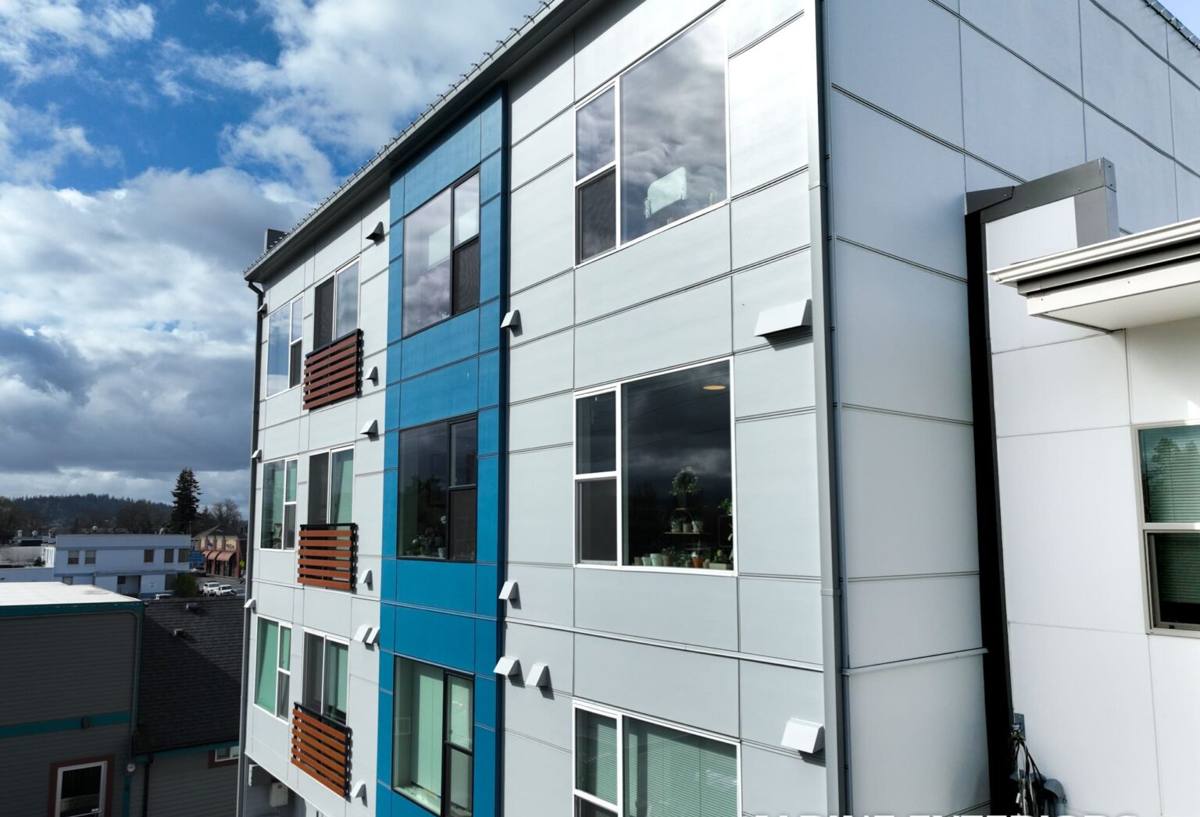
How Local Climate Affects Your Windows
Three conditions do most of the damage to windows in this part of Washington, and they compound each other.
Salt Air and Moisture-Laden Wind
Even away from the immediate waterfront, air moving through Skagit County off the Sound carries salt and moisture that accelerates corrosion on hardware, fasteners, and metal window components. Vinyl and fiberglass frames don't corrode, but the screws, hinges, and locking hardware inside any window can if they're not rated for coastal-adjacent exposure. Cheaper hardware packages show pitting and stiffness within a few years.
Driving Rain
Wind-driven rain doesn't just hit a window head-on — it gets pushed sideways and upward under trim, into gaps, and behind poorly lapped flashing. A window that would perform fine in a low-wind climate can leak here simply because the installation didn't account for rain moving in more directions than straight down. This is the single biggest cause of the water damage we find behind old window openings.
Extended Moss and Mildew Season
Constant dampness plus shade from mature trees (common on Burlington lots) means moss, algae, and mildew get a long runway. On windows, this shows up as black streaking on sills, soft or discolored wood trim, and gasket material that degrades faster than it would in a drier climate. It's mostly cosmetic until it isn't — once moisture tracks past a compromised gasket or sill, it's a rot problem.
Signs a Burlington Home Needs Window Replacement
- Fogging or a hazy film between panes — the sealed gas fill has failed and can't be repaired
- Soft, spongy, or discolored wood at the sill or bottom corners of the frame
- Windows that won't stay open, won't latch fully, or have become hard to operate
- Noticeable draft or cold spot near the window even when it's fully closed
- Visible daylight or gaps around the frame from outside
- Rising energy bills without any other explanation
- Persistent condensation on the inside of the glass in cooler months
Any one of these on its own isn't necessarily urgent. Several together, especially on the weather-facing side of a house, usually means the window and possibly the framing behind it need attention before another wet season.
What a Correct Window Replacement Job Actually Involves
The window itself is only part of the job. Most window failures we get called out to fix started as installation shortcuts, not product defects. A correct replacement includes:
Opening Inspection Before Anything Goes In
Once the old window is out, the framing, sheathing, and any existing flashing are exposed. This is the point where hidden rot or moisture damage gets found — and it has to get fixed before a new window goes in, not covered over. We don't install into a wet or damaged opening.
Flashing and Weatherproofing Sequence
Every layer — sill pan, side flashing, head flashing, and house wrap integration — has to lap in the correct order so water is always directed outward and down, never trapped behind the window. This sequence is where driving rain either gets shed or gets in, and it's the part of the job that's invisible once trim goes back on.
Air Sealing and Insulation Around the Frame
Gaps around a new window frame need to be sealed with appropriate low-expansion foam or backer rod and sealant — not stuffed with fiberglass insulation alone, which does nothing to stop air movement. Poor air sealing is a common reason a "new" window still feels drafty.
Proper Fastening and Shimming
A window that isn't shimmed square and fastened per the manufacturer's schedule can bow, bind, or develop stress cracks in the frame over time — and it can void the manufacturer's warranty if something goes wrong later.
Window Material Comparison for This Climate
| Material | Moisture Behavior | Maintenance | Notes for Burlington Homes |
|---|---|---|---|
| Vinyl | Won't rot or corrode; performs well in damp climates | Low — occasional cleaning | Good value; wide range of quality tiers, so hardware and glass package matter more than the frame material itself |
| Fiberglass | Excellent moisture and temperature stability | Low | Higher upfront cost; holds up well against expansion/contraction from our wet-to-dry seasonal swings |
| Wood (clad exterior) | Interior wood needs the exterior clad layer to stay fully intact | Moderate to high | We're selective about clad-wood in high-moisture, moss-prone yards — any breach in the cladding lets moisture into the wood core, and repairs are harder than with all-vinyl or fiberglass units |
| Aluminum | Prone to condensation and thermal transfer | Low | Generally not what we recommend for this climate; it conducts cold and tends to sweat on the interior during Skagit County's wetter, cooler months |
We install based on what fits the home and budget, but for most Burlington replacements we steer homeowners toward vinyl or fiberglass because they hold up against the moisture cycle here with the least long-term maintenance.
Cost Factors for Window Replacement
| Factor | Why It Affects Price |
|---|---|
| Number and size of windows | Larger openings and full-house jobs get better per-unit pricing than one-off replacements |
| Frame material and glass package | Fiberglass and upgraded low-E or triple-pane glass cost more than standard vinyl and dual-pane |
| Condition of the existing opening | Hidden rot or water damage found during removal adds repair time before the new window can go in |
| Retrofit vs. full-frame replacement | Full-frame replacement (removing trim and flashing entirely) costs more than an insert but is often the right call on older, weather-exposed openings |
| Access and building height | Second-story or hard-to-reach windows take more setup time |
We give firm, itemized quotes after seeing the actual openings — not a ballpark over the phone. Broad ranges vary a lot depending on the factors above, which is why we walk the job in person before pricing it.
Our Process for Burlington Window Replacement
- On-site assessment — we look at every window being considered, check for existing moisture or rot, and talk through material and glass options for your specific exposure (sun side, weather side, shaded side).
- Written estimate — itemized by window, so you can see exactly what you're paying for and where.
- Ordering and scheduling — we confirm sizes and order product, then schedule around weather windows where possible.
- Removal and opening inspection — old windows come out, framing gets inspected, and any damage is addressed before new units go in.
- Installation — correct flashing sequence, air sealing, shimming, and fastening per manufacturer specification.
- Final check and cleanup — operation, seal, and trim are checked on every window before we consider the job done, and the site is cleaned up.
Why a Local Anacortes Crew Matters for Burlington Homes
Window replacement is one of those projects where local experience shows up in details that are easy to miss from the outside. A crew that works Skagit County regularly already knows which flashing details hold up against wind-driven rain here, which hardware packages resist the salt-air corrosion that shows up a few years down the road, and which framing conditions are common on older Burlington homes versus newer construction. That's not something you get from a national installer working off a generic spec sheet.
Being based in Anacortes also means we're not driving a long distance for warranty callbacks, follow-up questions, or a quick check if something seems off after a storm. We're already in the area.
Before You Hire — A Quick Checklist
- Get a written, itemized estimate — not a single lump-sum number
- Ask what happens if rot or damage is found once the old window is removed
- Confirm who is responsible for permits, if required for your project
- Ask about the manufacturer's warranty and the installer's own workmanship warranty separately
- Confirm the flashing and weatherproofing method they use, not just the window brand
- Ask for proof of licensing and insurance
If a contractor can't answer the flashing and warranty questions clearly, that's worth noticing before you sign anything.
If your Burlington home has windows showing any of the wear signs above, or you're planning ahead for a full replacement, we're happy to walk the property and give you a straight, no-pressure estimate. Use the form below to get started.