 Anacortes
 Why La Conner's Waterfront Setting Is Hard on Windows
La Conner sits right on the Swinomish Channel, and that waterfront location is part of what makes it beautiful — and part of what wears out windows faster than in a lot of inland Skagit County neighborhoods. Salt-laden air off the channel and the Sound corrodes exposed metal hardware, pits aluminum frames, and breaks down weatherstripping and seals well before their rated lifespan. Add in wind-driven rain that comes off the water sideways during winter storms, and any weak point in a window's flashing or seal turns into an active leak path instead of a slow drip.
Then there's moss and algae. The combination of shade from mature trees, high humidity, and a long wet season means north-facing walls and lower-story windows in La Conner stay damp for weeks at a stretch. That moisture doesn't just stain sills and trim — it feeds rot in wood frames and sashes that aren't sealed and finished correctly. A window that would last two or three decades in a drier climate can fail in half that time here if it wasn't built or installed with this environment in mind.
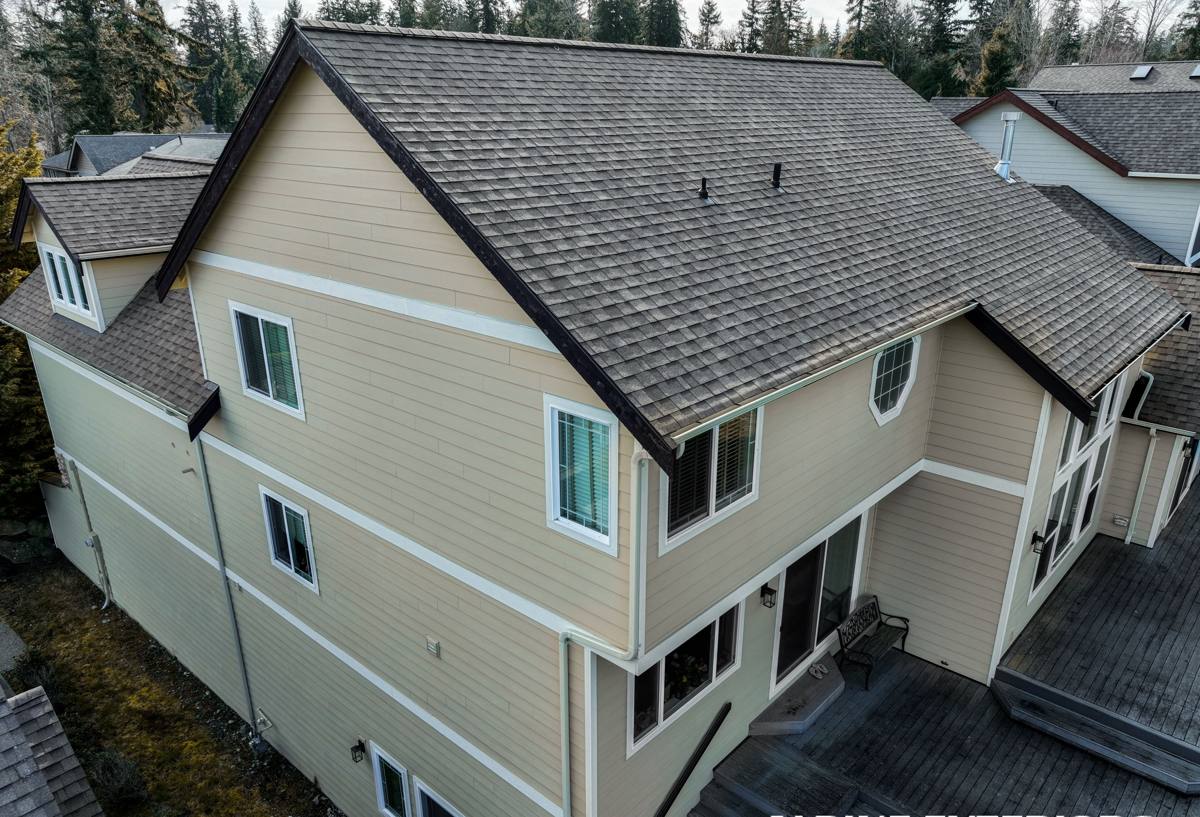
Signs Your Windows Are Already Losing the Fight
Most window failure in this area doesn't announce itself with a dramatic leak. It shows up as small, easy-to-dismiss symptoms that add up over a few seasons:
- Fog or moisture trapped between panes of a double-pane window (a broken seal — the gas fill has escaped and it can't be fixed, only replaced)
- Cold drafts near the frame even when the window is fully latched
- Wood sashes or sills that feel soft, look discolored, or have visible moss/algae growth
- Windows that are difficult to open, close, or lock — often a sign the frame has swelled from moisture or shifted
- Condensation forming on the inside of the glass regularly, which points to poor insulating value or interior humidity with nowhere to go
- Visible daylight or air movement around the frame when you hold a hand near the edge on a windy day
Any one of these on its own isn't an emergency. Several of them together, especially on a wall that faces the water or sits in shade most of the day, usually means the window's useful life is behind it.
What a Correct Window Replacement Actually Involves
Swapping in a new window is easy to do poorly and easy to get away with — for a while. The problems show up months or years later, usually as water damage inside the wall cavity where nobody can see it until the drywall or siding is already compromised. A job done right includes a few non-negotiable steps:
Removing the Old Window Without Guessing
Before a new unit goes in, the old frame comes out and the rough opening gets inspected. This is the point where hidden rot, old caulk-only "flashing," or water staining inside the wall gets found — not after the new window is already sealed up over the same problem.
Flashing and Water Management
This is the step that matters most in a climate like ours. Proper flashing tape and a correctly lapped house wrap direct any water that gets past the window itself down and out, rather than into the wall framing. On a wind-driven-rain coast like this one, a window that's caulked in without real flashing is a leak on a timeline, not a maybe.
Air Sealing and Insulation
The gap between the new frame and the rough opening needs to be filled with a low-expansion foam or backer rod and sealant — not left open, and not overfilled in a way that bows the frame. This is what actually stops the drafts and controls interior condensation, more than the window itself does.
Interior and Exterior Finish Work
Trim, caulking, and paint or stain need to go back cleanly, with all exterior joints sealed against wind-driven rain. On older La Conner homes, matching existing trim profiles matters for the house to look right when the job's done.
Choosing Windows That Hold Up in This Climate
There's no single "best" window material — there's a best fit for your house, your budget, and how exposed it is to salt air and moisture. Here's how the common options compare for a waterfront Skagit County home:
| Material | Salt air / corrosion resistance | Moisture behavior | Maintenance |
|---|---|---|---|
| Vinyl | Good — won't corrode; hardware is the weak point over time | Won't rot; seals are the long-term concern | Low — occasional cleaning |
| Fiberglass | Very good — stable in temperature swings and salt exposure | Excellent — dimensionally stable, resists warping | Low |
| Wood (unclad) | Poor unless finish is maintained religiously | Needs consistent painting/staining to resist rot | High — repainting/resealing on a schedule |
| Wood-clad (exterior vinyl or aluminum shell) | Good on the exterior face; interior wood still needs care | Good if cladding and flashing are done right | Moderate |
| Aluminum (uninsulated/older style) | Poor — pits and corrodes in salt air over time | Prone to condensation; conducts cold | Moderate to high |
For most La Conner homes, especially anything with direct water exposure or heavy tree shade, we steer people toward vinyl or fiberglass for the exterior-facing performance, with wood-clad as a middle option when the look of real wood on the interior matters. We're honest about the trade-off with unclad wood windows in this climate: they can look great, but only if someone keeps up with the finish every few years. If that maintenance schedule isn't realistic for your household, it's worth knowing that going in rather than finding out after the paint starts failing.
Energy Performance and Comfort
Skagit County winters aren't brutally cold, but the damp, wind-exposed setting in La Conner makes drafts and heat loss more noticeable than the thermometer alone would suggest. A few features matter more here than in a drier inland climate:
- Low-E glass coatings reduce heat loss through the glass and cut down on the cold-glass feeling near windows in winter
- Argon or krypton gas fills between panes add insulating value without changing the window's appearance
- Warm-edge spacers (rather than older metal spacers) reduce condensation risk at the edge of the glass, which matters in a humid environment
- Tight NFRC-rated U-factor and air infiltration numbers tell you how the window actually performs, not just what the marketing claims
Our Process for a La Conner Window Replacement
We keep the process straightforward and try not to make a homeowner guess what's happening at each stage:
- On-site assessment — we look at each window's actual condition, the rough opening, and how exposed that wall is to wind, rain, and shade
- Honest recommendation — which windows genuinely need replacement now versus which can wait, and what material makes sense for that specific wall
- Accurate measurement and ordering — correct sizing avoids gaps, shims, or delays later
- Removal and inspection — old windows come out, and we check the framing underneath before anything new goes in
- Installation with proper flashing and sealing — the water-management details described above, done the same way every time
- Finish work and cleanup — trim, caulking, and a final check that everything opens, closes, and locks the way it should
What Drives the Cost
Every home is different, but the main cost factors on a window replacement project are consistent. Broad ranges below are meant to help you think about the project, not serve as a quote:
| Factor | Why it moves the price |
|---|---|
| Window material (vinyl, fiberglass, wood-clad) | Material and manufacturing cost vary significantly |
| Number of windows and their size | Larger openings and whole-house jobs have different labor and material needs than one or two windows |
| Condition of the existing rough opening | Rot repair or reframing adds time and material beyond a straightforward swap |
| Full-frame vs. insert replacement | Full-frame replaces the entire unit down to the framing; inserts fit into a sound existing frame and typically cost less |
| Glass and performance package | Low-E coatings, gas fills, and impact-resistant glass add cost but improve comfort and durability |
| Trim and finish requirements | Matching existing trim profiles on older homes takes more time than standard trim |
Most projects fall in a broad middle range for a standard-size window with a sound opening, with full-frame replacements, rot repair, or larger custom sizes pushing toward the higher end. We give a firm number after seeing the actual windows and openings — not a phone estimate.
Why It Matters That a Crew Already Works in La Conner
A contractor who's worked on homes along the Swinomish Channel and elsewhere in this stretch of Skagit County already knows which walls take the worst of the wind-driven rain, how fast moss builds back on a shaded north side, and what older La Conner construction tends to hide behind the trim once it's opened up. That's not something you can fully substitute with a general checklist — it's pattern recognition from having done the work here repeatedly. If your home sits within La Conner's historic core, exterior appearance can also matter more to the neighborhood's character, and it's worth discussing window style and trim details with your contractor before ordering anything.
A Few Questions Worth Asking Any Contractor Before You Hire
- Will you inspect and address any rot or water damage found in the rough opening, or just install over it?
- What flashing method do you use, and will it be visible or explained during the job?
- Is the quote full-frame or insert replacement, and why do you recommend that approach for my house?
- What's the warranty on the window itself versus the installation labor?
- Have you worked on homes in La Conner or similarly exposed waterfront settings before?
If your windows are drafty, fogged, hard to operate, or just old enough that you're wondering, we're glad to take a look and give you a straight answer — no pressure, no upsell. Fill out the form below for a free estimate on window replacement for your La Conner home.